Presence Coach vs. Confidence Coach: What's the Difference?
By Kate Ziuz | Presence Coach for Founders & Entrepreneurs
If you've been searching for help with how you show up — on stage, on camera, in high-stakes rooms — you've probably run into both terms. Confidence coach. Presence coach. Sometimes executive presence coach. Often used as if they mean the same thing.
They don't. And picking the wrong one is the reason a lot of accomplished women spend a year working on themselves and see no change in how people respond to them.
Here's the actual difference, and how to tell which one you need.
The Short Answer
A confidence coach works on how you feel. Internal state, self-belief, mindset, the stories you tell yourself, imposter syndrome, fear of visibility. The work is psychological and emotional.
A presence coach works on what people perceive. Posture, eye contact, pace, gesture, stillness, energy, framing on camera. The work is physical and observable.
One changes your experience of yourself. The other changes other people's experience of you.
They're both legitimate. They solve different problems. And most women who feel stuck are being sold the first when they need the second.
Why the Confusion Exists
The overlap is real, which is why the terms get blurred.
Both fields address the same visible symptom: someone who isn't showing up the way they want to. Both are often marketed to women. Both use words like authority, power, and owning the room. And genuinely — feeling more confident sometimes does change how you carry yourself.
But that last point is where the confusion turns costly. It works in one direction some of the time, and people assume it works in that direction all the time.
It doesn't. Because the physical patterns that determine how people perceive you weren't installed by your feelings. They were installed by your history.
The Core Distinction: Confidence Is Invisible
This is the piece that reframes everything.
Confidence is an internal state. Nobody in the room can see it. Your audience has no access to how self-assured you feel. What they can see is entirely physical: whether your shoulders are back or rounded forward, whether your eyes land or scan, whether your voice ends statements as statements or lifts them into questions, whether your hands are still or restless.
Those signals run on their own. They're habitual — patterns your body learned under pressure years ago and now executes automatically, regardless of your inner state.
Which produces the two situations I see constantly:
Confident inside, uncertain outside. A woman with genuine, earned confidence whose body still compresses the moment attention arrives. She feels fine. She reads as unsure. People underestimate her and she has no idea why.
Nervous inside, authoritative outside. Someone who feels anxious but whose mechanics are solid — grounded stance, steady eyes, measured pace. The room reads authority. Nobody knows she was nervous.
If the second scenario is possible, then confidence was never the mechanism. The mechanics were.
What Each Type of Coaching Actually Looks Like
Working with a confidence coach, you'll likely spend time on beliefs and thought patterns, examining where self-doubt originated, reframing negative self-talk, mindset practices, and building tolerance for being visible. The measure of success is internal: you feel more capable, less afraid, more willing to take up space.
Working with a presence coach — at least the way I work — starts with an audit. We watch what your body actually does under pressure, on video and on your feet. Most clients have their first I had no idea I was doing that moment here, because these patterns are invisible from the inside.
Then it's mechanics: specific physical adjustments, taught and practiced. Where your shoulders sit so your chest stays open and your voice has room. Where your eyes go on camera to create real eye contact rather than a subtle, trust-eroding drift. How pauses signal certainty instead of hesitation. How to be still on a stage so it reads as authority rather than stiffness.
Then repetition across contexts until the new mechanics are automatic. The measure of success is external and observable: you can see the difference on video, and other people respond differently.
How to Tell Which One You Need
An honest self-assessment.
A confidence coach may be the better fit if: You're avoiding visible moments entirely — not pitching the podcast, not applying to speak, not turning the camera on. The barrier is happening before you show up. Fear of judgment is stopping you from taking opportunities you're qualified for. You feel like a fraud in rooms where your credentials say otherwise. The problem is genuinely, primarily internal.
A presence coach is likely what you need if: You're already showing up — recording, speaking, creating — and the response doesn't match your expertise. Podcast hosts don't rebook you. Content gets views but not clients. People in rooms respond to you at a level below where you actually operate. You watch your own footage and something feels off, but you can't name it. You've done the inner work, and it helped how you feel without changing how you're received.
That last one is the clearest signal there is. If confidence work made you feel better and changed nothing about how people treat you, you solved a real problem — just not the one that was costing you.
Where Executive Presence Coaching Fits
A third term you'll encounter. Executive presence coaching traditionally comes from the corporate leadership world — boardrooms, investor conversations, managing up, being seen as promotable. Frameworks like the 5 C's (confidence, composure, connection, credibility, charisma) come from this tradition.
It's valuable in its context. Two things are worth knowing about it:
It's mostly trait-based, not mechanics-based. Those frameworks describe qualities to embody rather than physical actions to practice. Knowing you should project composure doesn't tell you what to do with your hands.
It's built for a corporate ladder, not a visible brand. If your work is podcasts, stages, video content, and media — where the "room" is often a camera and the stakes are client-facing rather than promotion-facing — the traditional executive presence playbook covers only part of what you need.
Plenty of people, myself included, use "executive presence" because it's the term people search for. Worth asking whoever you're considering: are you teaching me qualities to embody, or physical mechanics to practice? The answer tells you which discipline you're actually buying.
Can You Need Both?
Yes, and some people do — usually in sequence rather than at once.
If fear is preventing you from showing up at all, mechanics work has nothing to attach to. You can't practice presence in moments you're not attending. Confidence work first, then mechanics once you're in the room.
But the more common sequence I see runs the other way, and it surprises people: the feeling follows the mechanics.
When your body is open, grounded, and still, your nervous system reads its own signals and settles. Clients regularly tell me they feel more confident after we've changed nothing about their beliefs — because the physical inputs changed, and the internal state followed. Fix what people can see, and you often get the internal shift as a byproduct. The reverse is much less reliable.
The Practical Question to Ask Any Coach
Whichever direction you go, ask this before you hire anyone:
"What will be observably different after we work together, and how would we measure it?"
A presence coach should be able to answer concretely — you'll see it on video, in your posture, in how you're received. If the answer is only about how you'll feel, you're being offered confidence coaching, which is fine as long as that's what you came for.
If You're Still Not Sure
Some situations genuinely sit on the line, and a conversation sorts it faster than a checklist.
Book a free 30-minute strategy call. We'll talk about what you're building, where things aren't landing, and which kind of work would actually move it — and if the honest answer is that you need something other than what I do, I'll tell you.
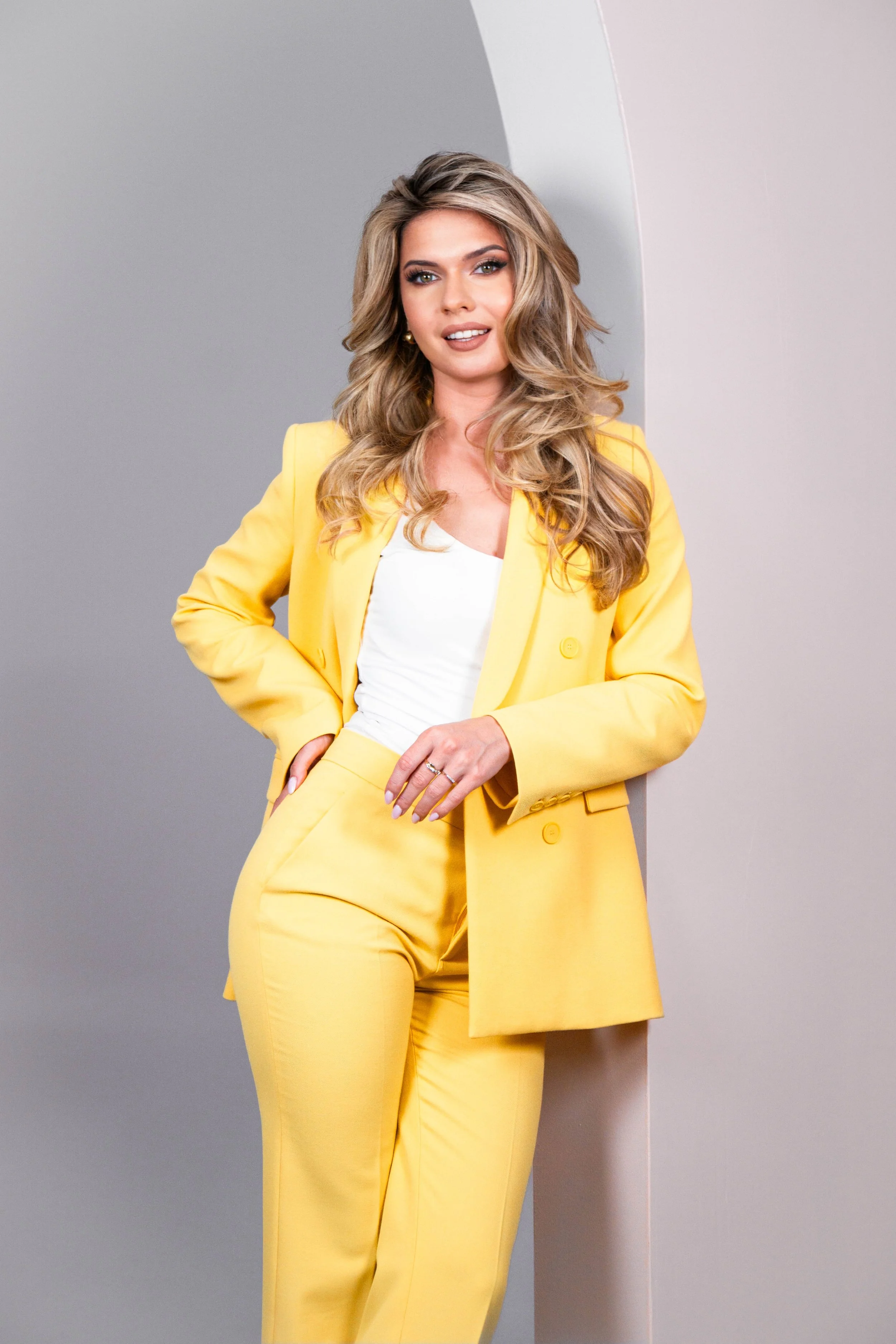
Kate Ziuz is a presence coach for founders and entrepreneurs building visible brands. She specializes in the mechanics of on-camera presence, stage presence, and high-stakes preparation — helping clients close the gap between their actual expertise and how credible they appear. Based in Los Angeles. Featured in Best Holistic Life Magazine, Femforce Podcast, Authority Magazine, and more.
