You Don't Need More Confidence. Here's What You Actually Need.
By Kate Ziuz | Presence Coach for Founders & Entrepreneurs
Someone told you that you need to be more confident.
More confident to get the speaking gig. More confident to be taken seriously in the room. More confident to show up on camera, to charge what you're worth, to get booked back on the podcast, to stop being talked over by people who know less than you do.
You've heard it so many times you started believing confidence was the missing ingredient. So you did the work. The mindset work, the affirmations, the journaling, the inner-critic exercises. Maybe you hired a confidence coach. Maybe you read the books. Maybe you genuinely do feel more confident than you did a year ago.
And you're still being overlooked.
Here's what nobody told you: confidence was never the problem.
Confidence Is Invisible. That's the Problem.
Confidence is internal. It's a feeling — a private, interior state that exists inside your head and nowhere else.
No one in that room can see your confidence. No one watching your podcast recording can measure how self-assured you felt. The audience at your speaking engagement has no access to your inner state whatsoever.
What they can see is your body.
They see shoulders that rounded forward the moment the record button was pressed. They see eyes that scan instead of land. They hear a voice that speeds up under pressure and trails off at the end of sentences, turning statements into questions. They see hands that fidget, weight that shifts, a frame that compresses to take up less space.
And here's the part that changes everything: those signals have nothing to do with how confident you feel. They're habitual physical patterns — things your body learned to do under pressure years ago and now runs automatically, regardless of your inner state.
You can feel completely confident and still look uncertain. You can feel terrified and still look like the most authoritative person in the room — if your mechanics are right.
Confidence is a feeling. Presence is what people can actually perceive. And only one of them is costing you clients.
Why Confidence Advice Keeps Failing You
The confidence industry has one core assumption: if you fix how you feel, how you show up will follow automatically.
It sounds reasonable. It's also wrong — and the proof is in every accomplished woman who has done years of inner work and still gets underestimated in rooms she's more than qualified to lead.
The assumption fails because your body's patterns under pressure were not installed by your feelings. They were installed by your history — years of classrooms, offices, meetings, and rooms that taught your body specific responses. Making yourself smaller when attention turned to you. Speeding up to finish your point before being interrupted. Softening your statements so they'd land as less threatening.
Those patterns became automatic. And automatic patterns don't check in with your confidence level before they run. Your body executes them at the exact moments that matter most — when the camera is on, when the stage lights come up, when the room turns to look at you — precisely because those are the moments your nervous system registers as pressure.
Mindset work cannot reach these patterns, for the same reason that believing in your tennis swing doesn't fix your tennis swing. The pattern lives in the body. The fix has to happen there too.
A Real Example: The Founder Who Paced
On my podcast Confidence Secrets, I interviewed Taylor Smith — a four-time founder who has generated over a million dollars in sales and speaks on stages regularly.
Taylor is not short on confidence. She's built businesses, hosts conferences, commands rooms. And when she started speaking on stages, she paced — back and forth across the stage, then wondered afterward why her feet hurt and her heels had given her blisters.
Taylor has worked with speaking and presence coaches — her reasoning: they see what you can't see. And when she pulled back the layers with her coach, the source became clear: she'd spent years as a classroom teacher, trained to walk the floor, survey the room, keep students engaged by staying in motion. Her body had learned that movement equals holding attention. It was a professional skill — in a classroom.
On a stage, the exact same pattern read as nervous energy.
Now ask yourself: what would confidence coaching have done for Taylor? Nothing. She already felt confident. The pattern wasn't coming from self-doubt — it was coming from muscle memory. It needed to be seen, named, and physically replaced. That's mechanics work. And it's a completely different discipline from working on how you feel.
Every founder I coach has a version of Taylor's pacing. A pattern installed somewhere else, running automatically in every high-stakes moment, invisible from the inside, and completely unrelated to their confidence level.
What You Actually Need: Mechanics
Here's the reframe that changes how you approach every visible moment from now on.
Stop asking: "How do I feel more confident?"
Start asking: "What is my body actually doing — and what do I want it to do instead?"
That second question has real answers. Specific, learnable, trainable answers:
Where your shoulders sit determines whether your chest is open and your voice has room — or whether you sound compressed and tentative. Where your eyes go on camera determines whether viewers experience eye contact or a subtle, trust-eroding off-gaze. The pace of your speech signals certainty or anxiety within the first ninety seconds. The stillness of your hands and your stance reads as grounded authority — or as barely contained nerves.
None of these require you to feel anything in particular. They are physical choices, practiced until they become your new automatic. And here's what surprises every client: the feelings follow the mechanics, not the other way around. When your body is grounded, open, and still, your nervous system reads its own signals and settles. You end up feeling more confident because you fixed the mechanics — not as a prerequisite for fixing them.
How to Tell Which One You Actually Need
A simple honest test.
If you avoid visible moments entirely — you won't book the podcast, won't submit the speaker application, won't turn the camera on — the barrier may genuinely be internal, and confidence or mindset work has real value there.
But if you're already showing up — recording the podcasts, taking the stages, making the content — and the results don't match your expertise? If people aren't booking you back, the content isn't converting, the room isn't responding to you at your actual level?
That's not a confidence gap. That's a presence gap. And no amount of feeling better will close it, because the problem was never in how you feel. It's in what people can see.
The Cost of Solving the Wrong Problem
Every month you spend working on confidence when the problem is mechanics is a month of visible moments that underperform.
The podcast where you sounded less authoritative than you are. The speaking gig that didn't generate follow-up invitations. The video content that got views but not clients. Each one either builds your authority or quietly erodes it — and if your body is running old patterns, you're eroding while you're working hard to improve.
You've done the inner work. It wasn't wasted — but it was never going to be enough on its own, because the patterns people see aren't controlled by the feelings you fixed.
The mechanics are the missing layer. And unlike confidence, which is fuzzy and hard to measure, mechanics are concrete: we can see them on video, name them, replace them, and watch the difference in how people respond to you — often within weeks.
If This Landed
If you read this and recognized yourself — already visible, already doing the work, still not being received at your level — the next step is finding out what your specific patterns are. They're invisible from the inside. That's not a flaw; that's just how patterns work.
Book a free 30-minute strategy call. We'll talk about what you're building, where the gap is showing up, and exactly what's fixable.
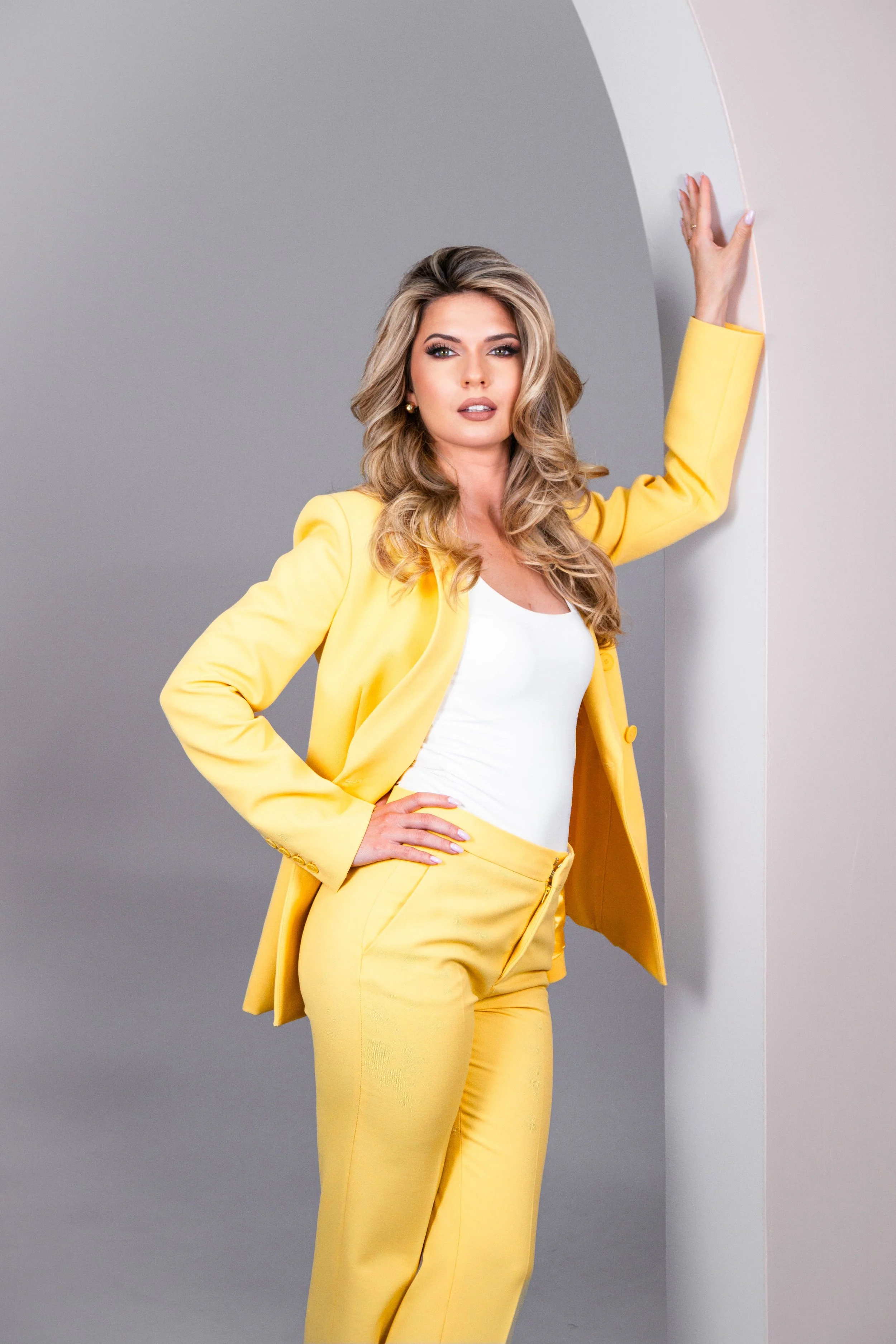
Kate Ziuz is a presence coach for founders and entrepreneurs building visible brands. She specializes in the mechanics of on-camera presence, stage presence, and high-stakes preparation — helping clients close the gap between their actual expertise and how credible they appear. Based in Los Angeles. Featured in Best Holistic Life Magazine, Femforce Podcast, Authority Magazine, and more.
