Why Being Known Matters More Than Being Perfect: Taylor Smith on Personal Branding and Showing Up
By Kate Ziuz | Presence Coach for Founders & Entrepreneurs
Taylor Smith was a college professor at 23, making $27,000 a year, with no network, no entrepreneur friends, and no idea how she'd ever get to the level of the founders she admired on podcasts.
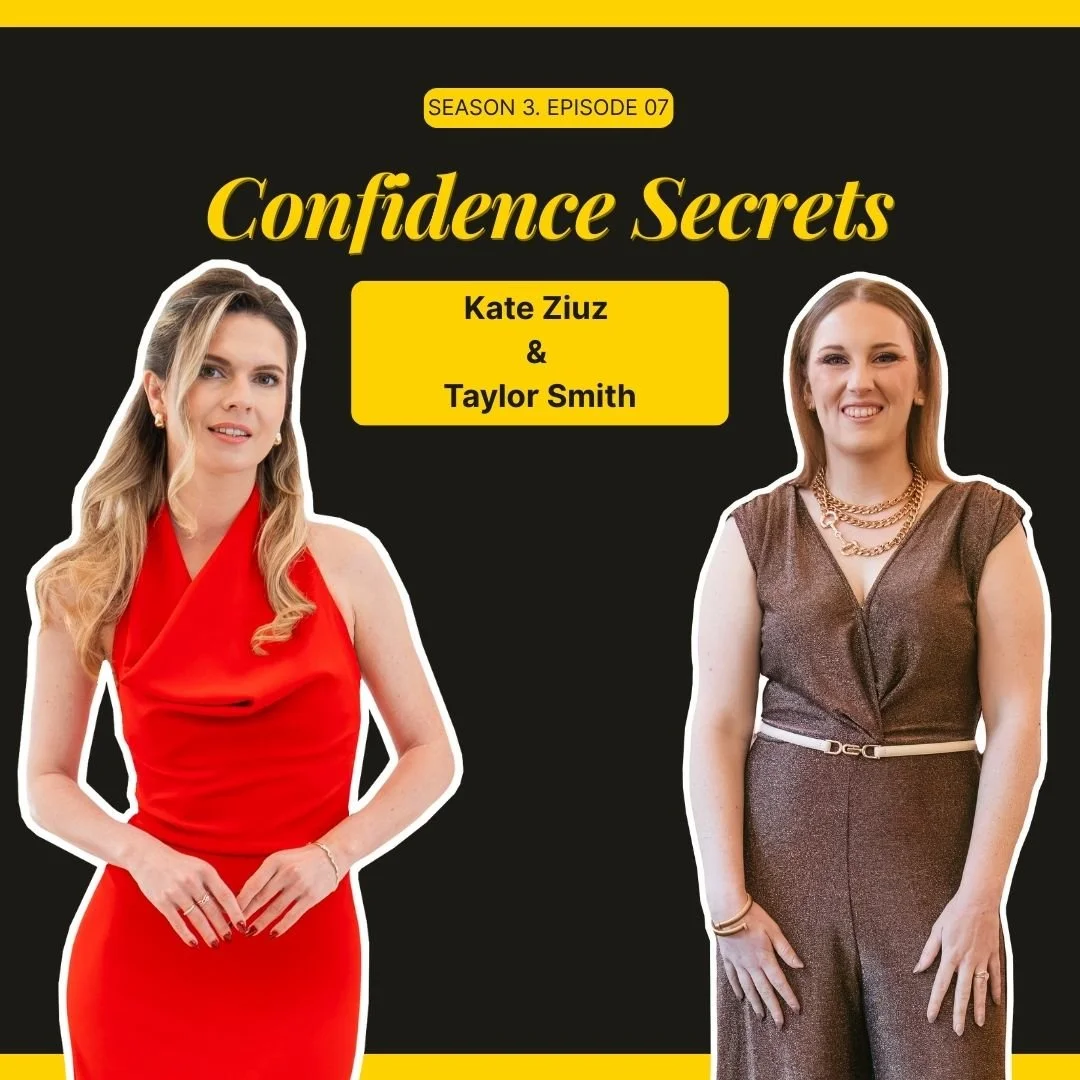
Today she's a four-time founder who has generated over a million dollars in sales, worked with 3,000+ women in business, built a community of 19,000 followers, and hosts both the PowerTable Podcast and her own live business conferences.
The turning point wasn't a strategy. It was a $1,000 conference ticket she almost talked herself out of buying — and a decision that being known matters more than being perfect.
I sat down with Taylor on Confidence Secrets to talk about visibility, personal branding, the perfectionism trap, and the moment a presence coach caught a stage habit she'd carried for years without knowing it.
Watch or listen to the full episode on YouTube | Spotify | Apple Podcasts
The $1,000 Ticket That Changed Everything
When Taylor left teaching, her businesses were already making three times her teaching salary. She was getting customers. By any external measure, it was working.
And she still felt like an impostor.
She was convinced she'd be a one-hit wonder — that the clients would dry up, and she'd have nowhere to turn because everyone she knew was in education. She watched famous entrepreneurs online and believed the gap between her and them was unclosable, because they had networks and she had none.
So she bought a ticket to a major women's business conference — the most money she'd ever spent in a single day — and immediately panicked. Taylor, what were you thinking? You won't know anyone. Everyone there already knows each other.
Then she went. And discovered the room was full of women exactly like her — women who'd been in their own bubble, who didn't have famous entrepreneur friends, who came for the same reason she did: to grow their network and start becoming known.
That reframe matters for every founder who avoids the room because they assume everyone in it is already connected. They're not. Most of them are hoping someone will come say hello.
Taylor's Networking Playbook: Start Before the Event
One of the most tactical parts of this conversation was Taylor's approach to events — because her visibility strategy starts before she ever walks in the door.
She finds people who are attending on social media and DMs them ahead of time: "Hey, I'm going to this event too — want to grab coffee the day before? I want to make sure I say hi to you in line." By the time she arrives, the room already contains familiar faces. The scariest part of networking — approaching strangers cold — has been engineered out in advance.
Her second move: before leaving any event, take photos with the people you connected with. Post them, tag them, or send them in a DM with a follow-up question. A photo is the beginning of a relationship, not a souvenir.
And her third: decide how you want to show up before you arrive. Taylor rehearses in the car on the way to events. If this is the year you want to speak on stages, every conversation should include that goal. If you're selling courses and not 1:1 services, introduce yourself accordingly. Intentionality beats improvisation.
This is preparation as presence strategy — and it's exactly what I teach clients before their high-stakes networking moments. The women who seem effortlessly connected at events did the work before the event started.
The Pacing Habit She Didn't Know She Had
Here's the part of the conversation I want every founder to hear.
Taylor has invested in speaking and presence coaches — the way she'd hire a CPA for her money or a strategist for her marketing. Her reasoning: people who coach in specific areas can see what you can't see.
And here's what her coach saw: Taylor paced. Constantly. Back and forth across every stage she spoke on. She'd finish talks wondering why her feet hurt and she had blisters from her heels.
When they pulled back the layers, the source was clear. Taylor had been a classroom teacher — trained to survey the room, walk the floor, check for phones, keep students' attention by staying in motion. Movement was a professional habit installed over years. It served her brilliantly in a classroom.
On a stage, it read as nervous energy.
That's the thing about presence patterns: they're not character flaws. They're adaptations that made sense somewhere else. Your body learned them for good reasons — and it will keep running them in every new context until someone helps you see them and replace them. Taylor felt confident on stage. Her body was telling a different story. No amount of mindset work would have caught that, because the problem was never in her mind.
The Perfectionism Trap
Taylor's core message — being known matters more than being perfect — comes from lived experience on both sides.
Her honest accounting: she has never sold or created a perfect product. Her conference for nearly a hundred women wasn't perfect. She's posted plenty of videos she now finds cringeworthy. And her businesses generated over a million dollars anyway — because perfectionism was never a requirement for success. Showing up consistently was.
She made a point that stuck with me: go look at which content actually got you clients. Often it's the imperfect posts — the messy hair, the talking-while-cleaning-the-office reels — because those are the ones where people saw the real you. Perfectionism, as Taylor put it, is ultimately just a form of self-doubt.
I see the same pattern from the presence side. Women wait to show up until the lighting is right, the outfit is right, the delivery is flawless. And the waiting costs them more than any imperfect appearance ever would — because presence is built through repetition, and repetition requires showing up before you feel ready.
Taylor's Tips for Building a Personal Brand That Gets You Seen — and Paid
Three takeaways from the end of our conversation, in Taylor's framework:
Leverage collaborations. The fastest way to be seen with a small audience is to borrow bigger ones — podcast swaps, Instagram Lives, joint events with people who serve the same client you do. You can do this at 100 followers or 100,000.
Show your face on video. Consumers want to trust that there's a real human behind the brand before they spend. Video is uncomfortable and it is also non-negotiable — and camera presence is a trainable skill, not a personality trait.
Share your wins. People love to work with winners. Client breakthroughs, features, progress toward goals — share them like they matter, because they do. Nobody can perceive authority you keep private.
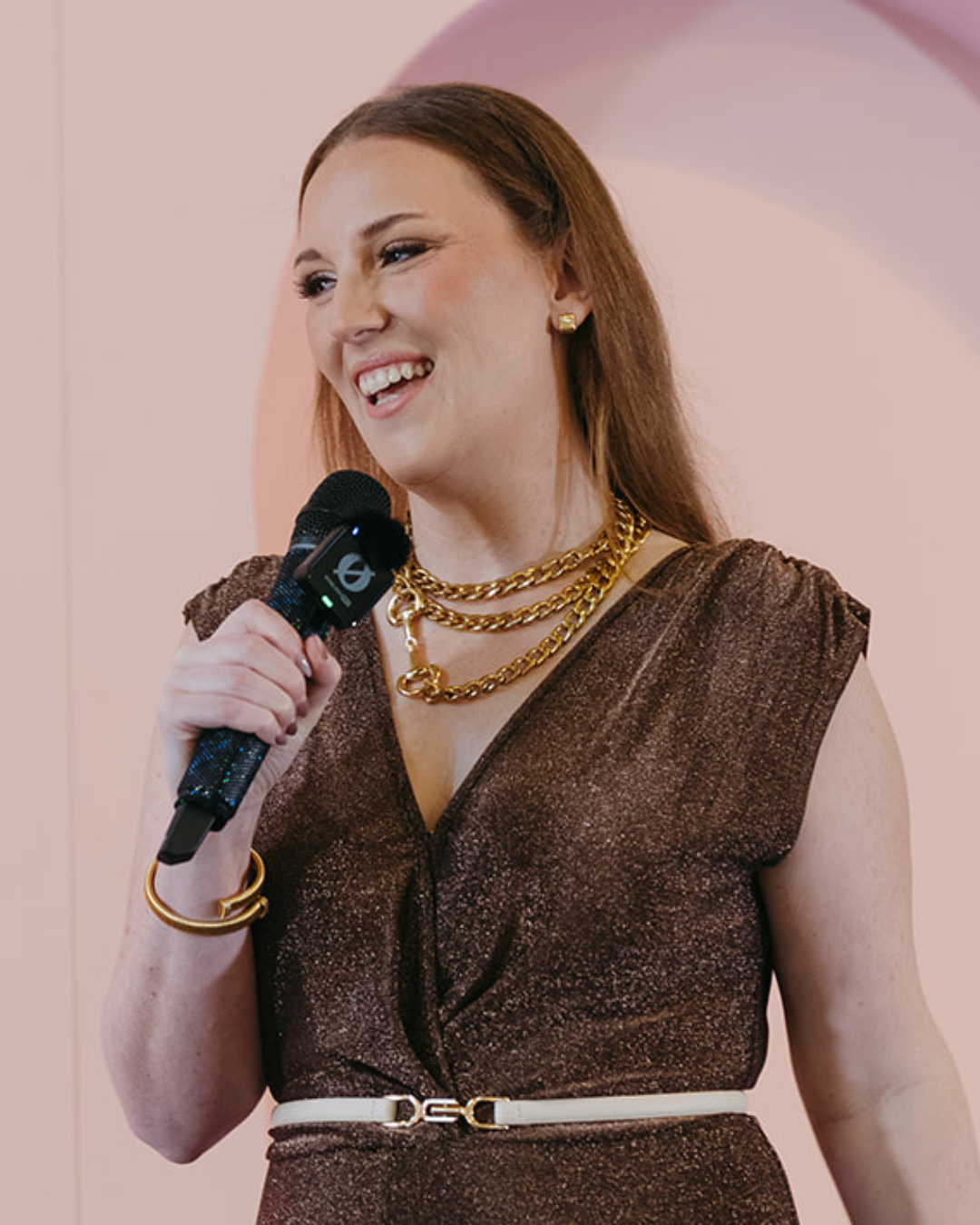
Taylor Smith
Taylor Smith is a business and marketing strategist, keynote speaker, and four-time founder who helps women turn their expertise into profitable, scalable offers. She holds a BA and MA in anthropology, has worked with over 3,000 women in business, and hosts the PowerTable Podcast and live business conferences, including the Stand Out & Sell Out virtual summit.
Connect with Taylor:
Instagram: @thepowertable.co
Podcast: PowerTable Podcast
Personal: Taylor Smith Online on Instagram and LinkedIn
The Takeaway for Founders Building Visible Brands
Taylor's story holds two truths at once: you don't have to be perfect to build authority — and you do have to be seen. The founders who win aren't the most polished. They're the ones who put themselves in the right rooms, show up on camera before they feel ready, and get expert eyes on the patterns they can't see themselves.
If there's a habit in your presence that's working against you — on stage, on camera, or in the room — you probably can't see it. That's not a flaw. That's just how patterns work.
Finding it is the first thing I do with every client.

About Kate Ziuz
Kate Ziuz is a presence coach for founders and entrepreneurs building visible brands. She specializes in the mechanics of on-camera presence, stage presence, and high-stakes preparation. Based in Los Angeles. Featured in Best Holistic Life Magazine, Femforce Podcast, Authority Magazine, and more.
