What Is Executive Presence and How Do You Build It?
By Kate Ziuz, Presence Coach for Women Leaders | Los Angeles
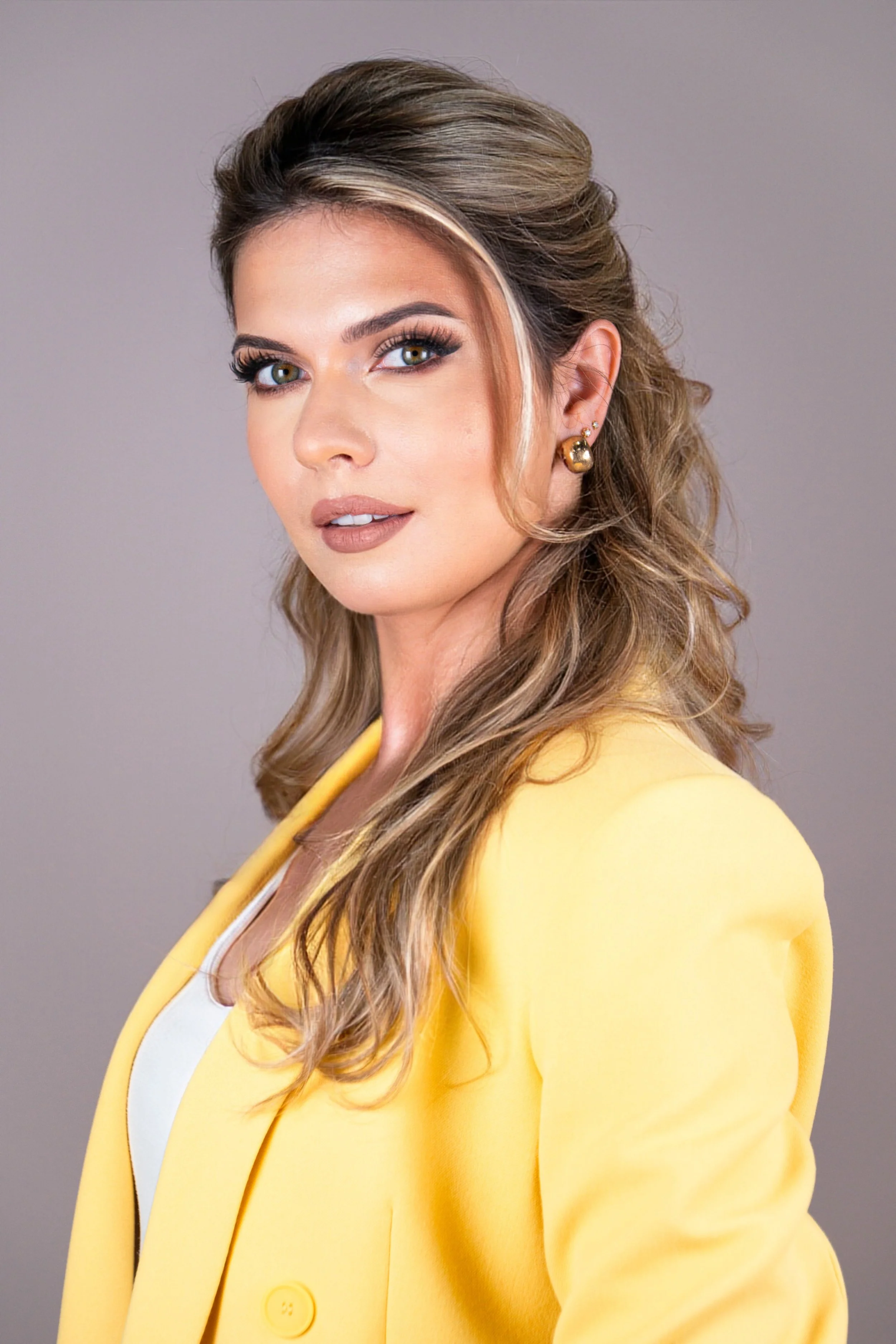
Kate Ziuz, presence coach for women, Los Angeles
When most people hear "executive presence," they picture a Fortune 500 CEO. Corner office. Power suit. Someone who commands a boardroom of fifty people without breaking a sweat.
That image is both limiting and misleading — and it's keeping a lot of accomplished women from claiming something that's actually theirs.
Executive presence isn't a corporate title. It's not a personality type. And it's definitely not something you either have or you don't.
It's a skill. And it belongs to anyone whose presence is an asset — which, when you think about it, is everyone.
So What Actually Is Executive Presence?
Here's how I define it after working with hundreds of women across Los Angeles and beyond:
Presence is the gap between how you feel on the inside and what actually lands on the outside — and the work is closing that gap.
Most people think presence is charisma. Magnetism. Some ineffable quality that certain people are born with. I think it's a set of mechanics. Where your eyes go. How you hold stillness. What happens in the first three seconds before you say a word.
And here's what I know to be true: you can be chosen — promoted, put on stages, relocated across the world for — and still not feel seen. Those are two completely different things.
"You can be chosen and still not feel seen. Those are two completely different things."
Presence is what bridges them. It's what makes someone impossible to ignore. And it can absolutely be learned.
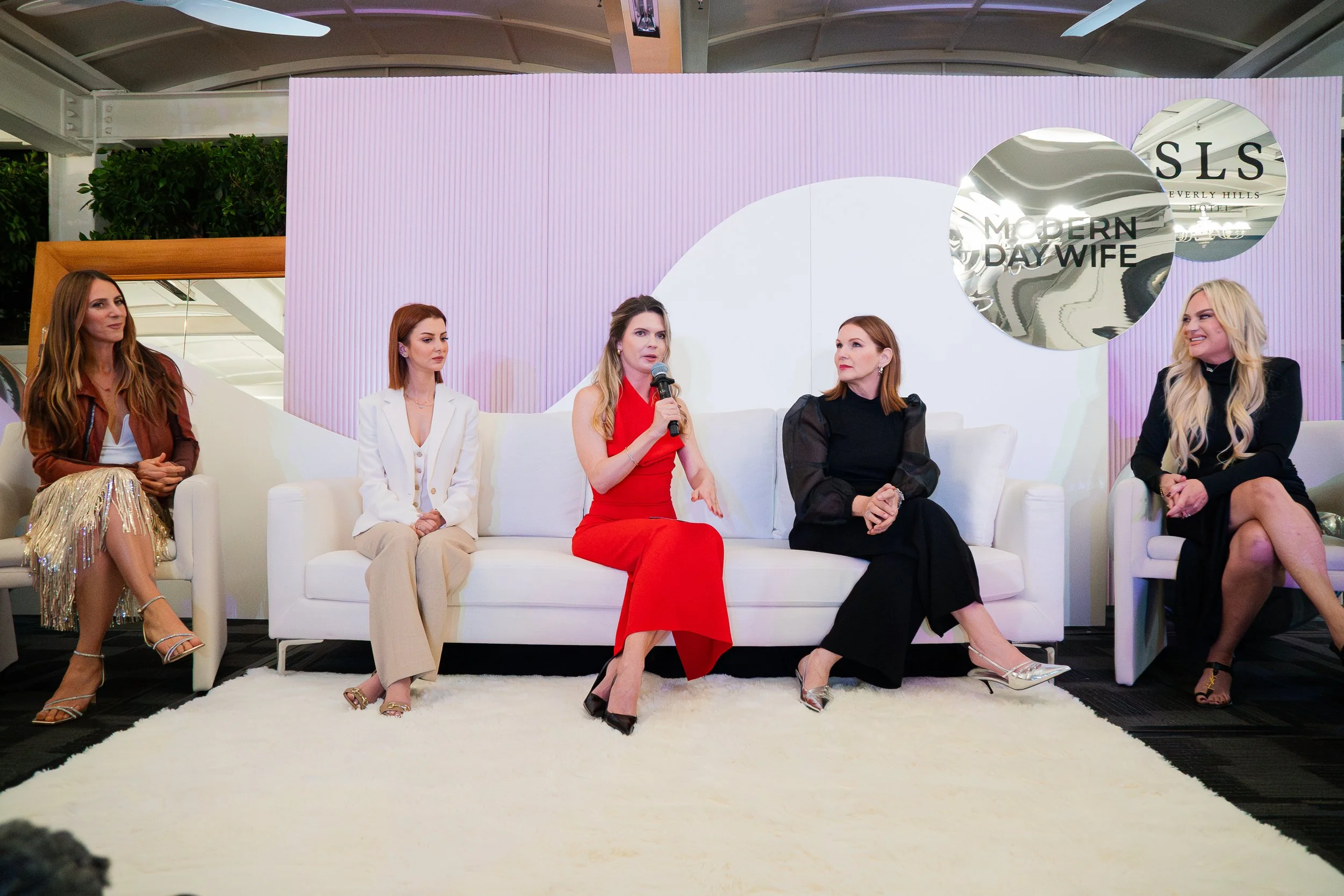
Kate Ziuz coaching women leaders on stage presence at a Los Angeles event
Who Actually Needs Executive Presence?
Not just executives. Not just corporate leaders. Anyone whose ability to communicate, connect, and be perceived accurately directly affects their results.
Let me show you what that looks like in practice — because the women I work with don't all look the same.
The Corporate Leader Turned Business Coach
She spent fifteen years climbing the ladder at a Big 4 firm. She knew how to lead teams of fifty, navigate boardrooms, manage million-dollar budgets. Then she launched her own coaching practice — and froze.
The corporate armor that had protected her for years was suddenly working against her. She was stiff in discovery calls. Guarded on camera. Her LinkedIn presence looked polished but felt distant. Potential clients weren't converting.
The problem wasn't her expertise. It was the gap between who she had become and how she was still showing up. She was leading with the armor instead of the person underneath it.
We spent three sessions dismantling the corporate default — the rigid posture, the formal cadence, the instinct to manage perception rather than create connection. By session four, she was magnetic in the exact way her ideal clients needed her to be.
The presence mistake: Confusing professional polish with genuine authority. Real presence isn't performance — it's alignment.
The Branding Strategist Who Became a First-Time Speaker
She had built an incredible business helping small brands find their visual identity. Her clients loved her. Her referrals were strong. Then she was invited to speak at a women's entrepreneurship conference in Los Angeles — and said yes before she had time to talk herself out of it.
She came to me six weeks before the event. Her content was good. Her ideas were clear. But the moment she stood up to deliver them, something shifted. Her voice got quieter. Her eyes went to the floor exactly when she needed them to hold steady. She finished her sentences with a rising inflection that turned every statement into a question.
She wasn't uncertain. Her body just hadn't gotten the memo yet.
We worked on three things: her opening (the first 30 seconds that set the entire tone), her eye contact pattern (point-to-point, one complete thought per person), and her closing (standing still, letting it land, waiting for the room to respond). She walked off that stage to a standing ovation.
The presence mistake: Letting the body default to nervous habits right at the highest-stakes moment. Stage presence is practiced — it doesn't just appear on the day.
The Beauty Brand Founder Who Had Never Done a Podcast
She had built a product line from scratch, grown a loyal customer community, and was ready to expand her visibility. A podcast host with 50,000 listeners invited her on as a guest. She accepted — and then spent two weeks dreading it.
Her concern wasn't what to say. It was everything else. Where to look. What to do with her hands. Whether her voice sounded credible. Whether she'd ramble. Whether the host would be able to tell she was nervous.
On camera, she had a habit I see constantly: looking at her own image instead of the lens. To every viewer watching, it read as distraction. She also spoke quickly when she was excited — which is when her best ideas came out, and also when they were hardest to follow.
We did two sessions specifically designed for podcast presence. By the end, she had a pre-recording reset routine, a pacing technique, and the muscle memory of looking directly into the lens. The episode went live and became one of the host's most-shared of the year.
The presence mistake: Underestimating how much the mechanics of on-camera presence affect how your ideas land — regardless of how good those ideas are.
The Executive Who Was Passed Over for Promotion
She had the track record. The performance reviews. The relationships. What she didn't have — or didn't know she was missing — was the physical signal of readiness that decision-makers were looking for.
In meetings, she sat back slightly when challenged. Her voice dropped at the end of sentences. She broke eye contact at exactly the moment her most important points needed to land. In boardrooms where millions of dollars were on the table, I've watched senior leaders make comments like: "He didn't look confident talking about revenue" or "She seemed like she was hiding something explaining the growth plans."
Decisions involving millions were being influenced by presence — not spreadsheets.
We worked on what I call the "ready position" — the specific physical signals that read as settled, certain, and in command even under pressure. Within a 6-week engagement, she had the language to describe what she was working on and the mechanics to back it up. Three months later, she was promoted.
The presence mistake: Assuming that internal confidence automatically translates into visible confidence. It doesn't — not until the body has been retrained.
The Patterns I See Everywhere
Across all of these women — different industries, different goals, different starting points — I see the same handful of patterns showing up over and over.
Premature smallness. Contracting before you've even been challenged. Before anyone has said a word to you, your body is already making itself smaller — already apologizing for being there. You can see it in the way someone enters a room: pace too quick, eyes scanning for approval, shoulders already forward.
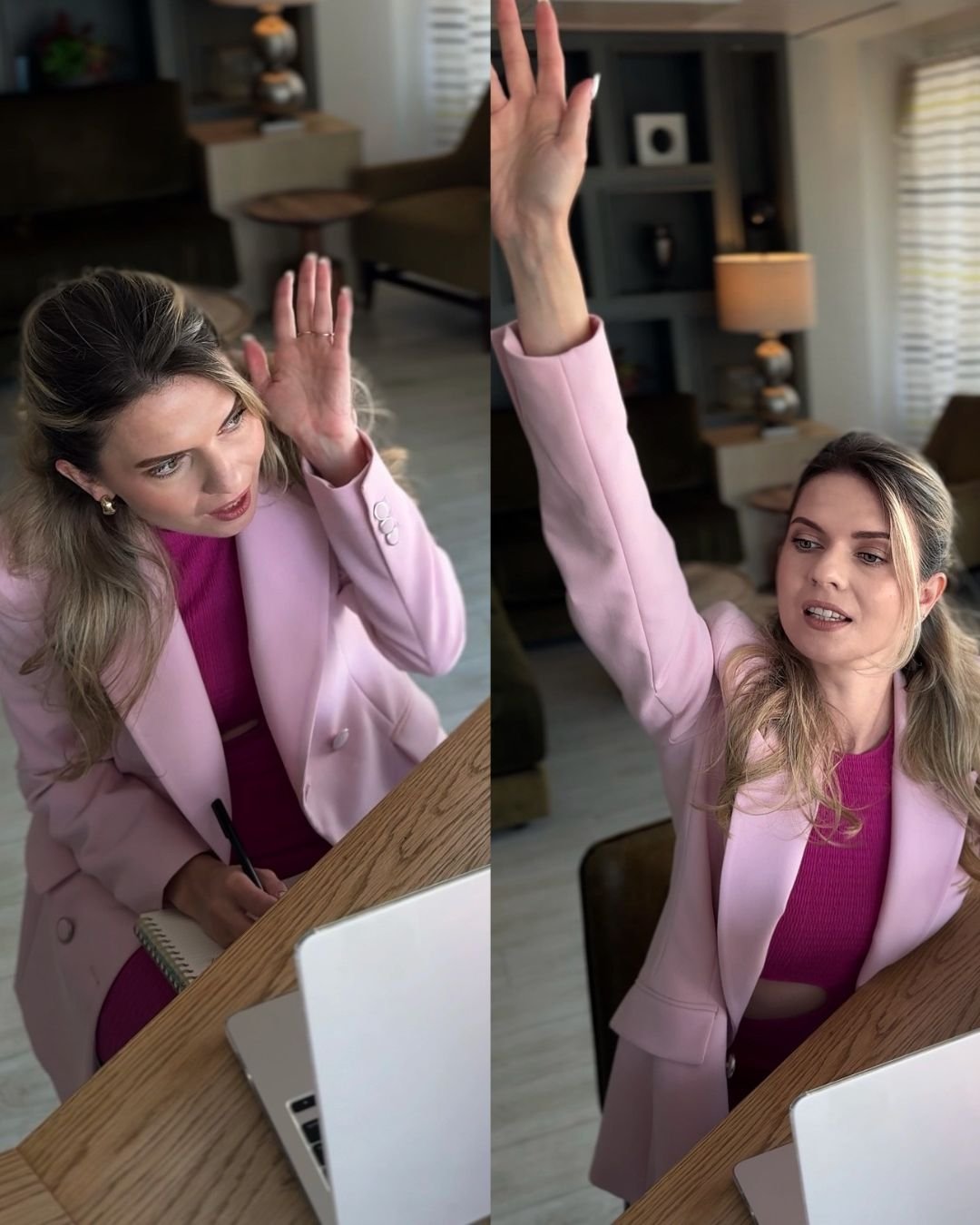
Presence coach Kate Ziuz demonstrating body language patterns
The question mark at the end of statements. Ending a declaration with a rising inflection that turns it into a question. It quietly signals uncertainty even when you're completely certain. "I've been doing this for ten years?" is a very different sentence than "I've been doing this for ten years."
Eye contact breaks at the wrong moment. Right when you're making your most important point — the eyes go down. It's a small thing that costs a lot. The room reads it as doubt, even when you're not doubting yourself at all.
The apologetic entry. Walking into a room already minimizing. Already scanning for permission. Your body is having a conversation the moment you walk in. The question is whether it's saying what you actually mean.
The voice that gets quieter exactly when the idea deserves volume. Passion speeds up speech and drops volume — the opposite of what presence requires. The moments when you're most excited are often the moments when you're hardest to follow.
None of these are character flaws. They're physical habits. And physical habits can be changed.
Presence Is the Multiplier
Here's what I've learned after more than a decade in corporate leadership and years of coaching women across Los Angeles:
Presence is the multiplier of everything you do.
Think about every human interaction your business depends on. Customers decide whether to trust you before they hear your pitch. Your team decides whether they can follow your leadership. Partners and investors decide whether you're someone they want to do business with.
All of that — before you've said a single substantive word.
Research confirms what most of us already sense: we instinctively read confidence as credibility. We trust, follow, and invest in people who project certainty — often before we've seen the evidence. Poor presence can reduce all your efforts to a fraction. Strong presence can amplify them.
The difference is intentionality.
"The body is always talking. The work is making sure it's saying what you mean."
You Don't Need a Different Personality. You Need Better Mechanics.
This is the part I want every woman reading this to hear:
You don't need to become louder, more aggressive, more "executive." You don't need to perform confidence you don't feel yet. You don't need to be someone you're not.
You need your outside to catch up with your inside.
The internal work you've done — the mindset shifts, the belief work, the years of building expertise — is real. But it doesn't automatically update the physical pattern. The shoulders still come forward. The voice still drops. The eyes still go down.
That's the gap I work in. And once you see it clearly, you can close it.
Three things that shift everything:
Own your impact. Stop qualifying your expertise. Stop leading with "I'm just a..." or "I only..." You've done the work. Let your body reflect that.
Practice being seen. Record yourself presenting. Watch it back with the sound off. Are your posture, your eye contact, your stillness saying what you mean? Most women have never watched themselves communicate — and have no idea how many signals they're sending that contradict what they know to be true about themselves.
Shift from approval to service. When you walk into a room thinking "I hope they like me," your body signals it. When you walk in thinking "I have something valuable for them," your entire energy changes. You're not performing for approval. You're delivering transformation.
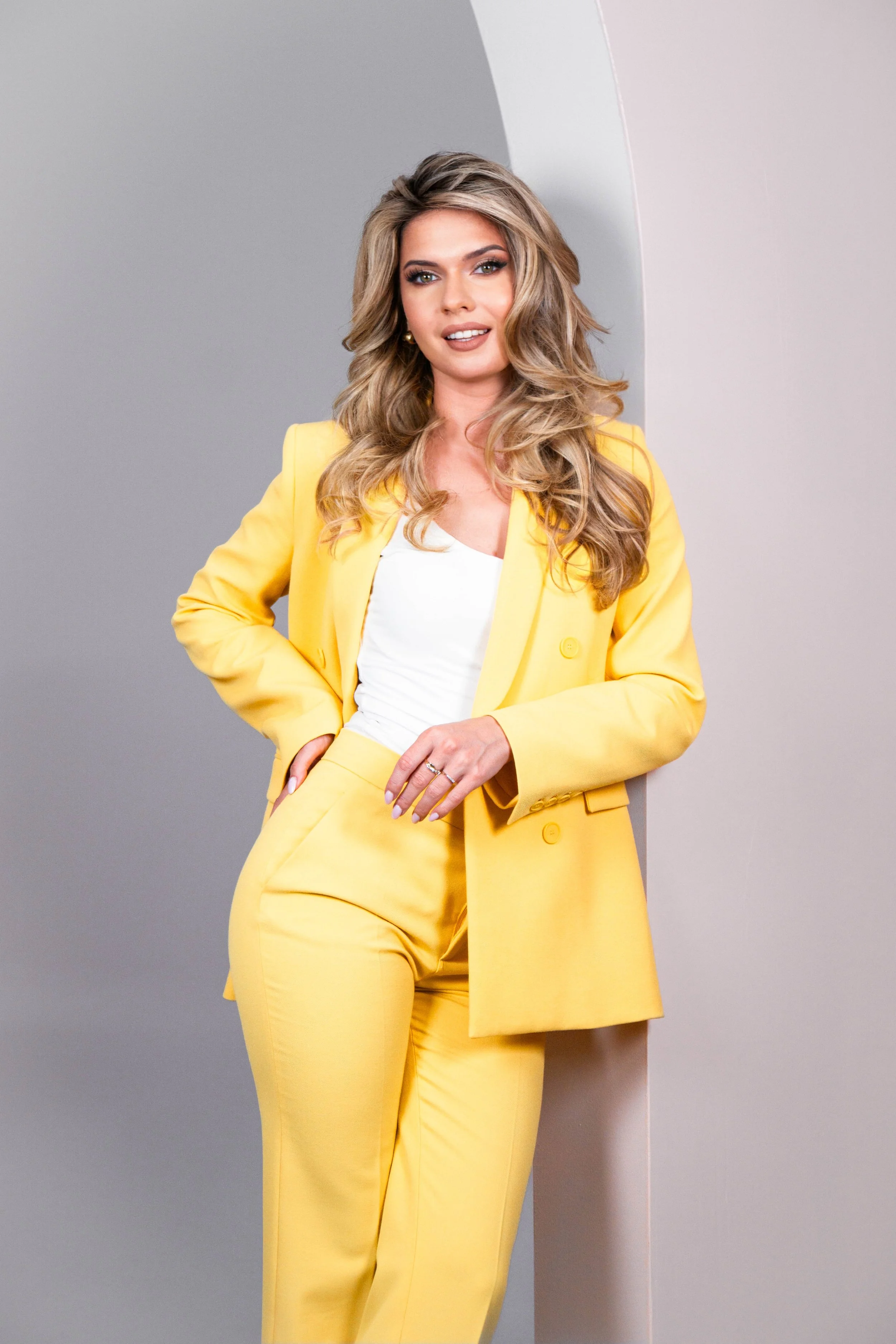
Kate Ziuz, presence and executive coach, Master Your Presence Los Angeles
Executive Presence Is for Anyone Whose Presence Is an Asset
Which is everyone.
The coach who left corporate to build something of her own. The strategist stepping onto her first stage. The founder going on her first podcast. The executive who has outgrown the version of herself the room keeps seeing.
Executive presence coaching in Los Angeles — and virtually — is what I do. Not theory. Not motivation. The specific, repeatable mechanics of how your presence translates in every room that matters.
If you recognized yourself anywhere in this post — in the client stories, in the patterns, in the gap between who you've become and how you're still showing up — let's talk.
📅 Book a free 30-minute strategy call and let's identify exactly what's costing you authority — and what to do about it.
Kate Ziuz is a presence and executive coach for women leaders based in Los Angeles. She works with executives, founders, and speakers on the specific mechanics of presence — body language, voice, and self-presentation — that close the gap between expertise and how it's perceived. Follow her on Instagram and LinkedIn.
