7 Presence Mistakes I Keep Seeing at LA Events (And How to Fix Them)
Welcome to "Spotted This Month" — a new monthly series where I share real observations from real rooms. No theory. Just field notes from a self-presentation expert who attends a lot of events.
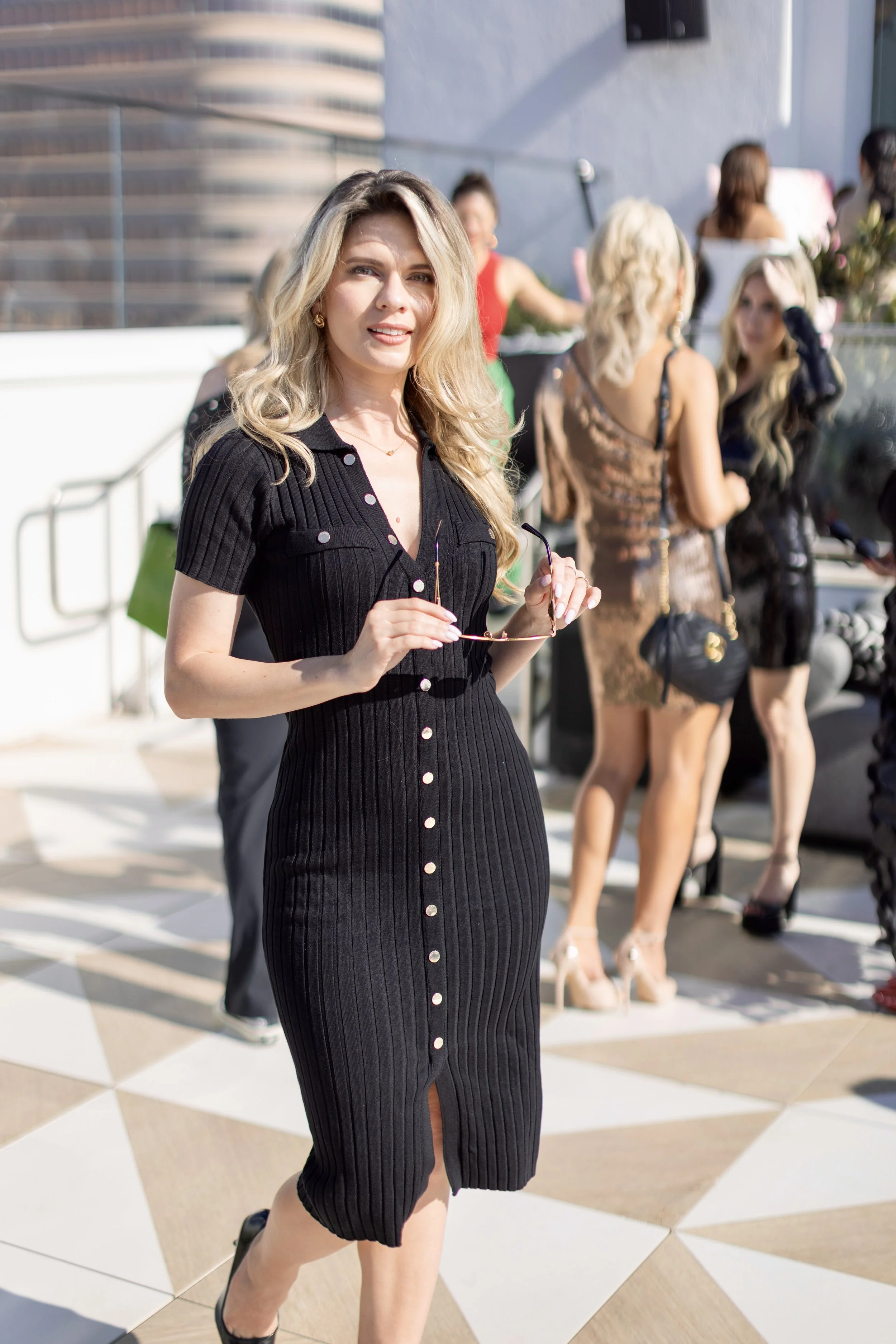
I attend a lot of events.
Networking mixers. Industry conferences. Fashion shows. Speaking panels. Women's leadership summits. Red carpet previews. If there's a room full of accomplished women in LA, I'm probably there — watching.
Not in a creepy way. In a professional way.
Because I'm a presence coach. And presence doesn't lie.
What I keep seeing — over and over, across very different rooms — are the same patterns. The same body language tells. The same vocal habits. From really smart, prepared, accomplished women who have absolutely no idea what their body and voice are broadcasting while they speak.
So I started keeping field notes. Literally writing things down after events and turning them into something useful.
This is that series. Every month, I'll share what I noticed — and more importantly, what you can do about it.
Here's what I spotted last month.
🔺 Mistake #1: The Word "Actually"
"I'm actually a leadership coach." "I'm actually the founder of the company." "This is actually a really important point..."
I hear this word everywhere. And every time, it does the same thing: it shrinks the statement that follows it.
"Actually" is a hedge. It signals — unconsciously — that you expect to be doubted. That you're surprised yourself. That you feel the need to qualify your own authority before the other person even has a chance to question it.
The fix: Cut it. Just say what you do. "I'm a leadership coach." "I'm the founder." Full stop. No qualifier needed. Own the sentence.
Try this: Record yourself doing a 60-second intro this week. Count how many times you say "actually." You might be surprised.
🔺 Mistake #2: Looking Down While Presenting
At your notes. At the floor. At your phone. At the PowerPoint slide behind you.
I watched a woman give a genuinely compelling pitch at a panel last month. Her content was strong. Her ideas were smart. But she spent about 40% of her presentation looking down — and the room disconnected. Not because of what she said. Because of where her eyes went.
Here's why this matters: eye contact is where your authority lives. When you look down, you physically hand the room your power. The audience reads it as uncertainty, even if you're completely certain.
The fix: Prepare well enough that you don't need your notes as a security blanket. Then practice delivering your key points — the opening, the main argument, the close — directly to a person. Not a wall. A person. Eye contact anchors your presence.
Quick tip: The "3-second rule" — hold eye contact with one person for about 3 seconds before moving to another. Long enough to connect. Short enough not to stare.
Check more tips about Mastering Your Eye Contact here.
🔺 Mistake #3: Hiding
Behind the table. Behind crossed arms. Behind the phone you're holding in front of your body like a shield.
The phone-as-prop is especially common at networking events. People hold it as something to do with their hands. But what it actually does is create a physical barrier between you and every person you're trying to connect with.
Same with crossed arms. Same with standing half-behind the tall cocktail table.
The fix: Open your body. Hands at your sides or in front of you, lightly clasped. Feet about hip-width apart. This is what I call a "grounded stance" — it signals availability, confidence, and ease. You don't look aggressive. You look present.
Try this: The next event you attend, notice where your hands go when you're not talking. That's where the hiding happens.
🔺 Mistake #4: Filler Words (It's Not What You Think)
"Umm... umm... and so... umm..."
Most people think filler words are a speech problem. They're not. They're a breath problem.
When we rush through speaking — when we're afraid of silence, when we feel like we have to fill every millisecond — we don't leave room for air. And when there's no air, the brain reaches for a filler word to buy time.
The real issue isn't the "umm." It's the pace.
The fix: Slow down. Breathe. Let the pause exist. A two-second pause feels eternal to the speaker and completely normal to the audience. The silence is not awkward — your reaction to the silence is what creates the awkwardness.
Practice exercise: Read a paragraph out loud. Every time you hit a period, stop completely. Count one full second before continuing. That discomfort you feel? That's the gap where "umm" used to live. Learn to sit in it.
🔺 Mistake #5: The Pre-Apology
"Sorry, I'm so nervous..." "I'm not really prepared for this, but..." "Bear with me, I'm not great at public speaking..."
Said before a single substantive word has been spoken.
I understand the impulse. It feels like managing expectations. It feels like being honest. It feels like getting ahead of any potential judgment.
What it actually does is this: it hands the room your weakness before you've given them anything worth hearing.
The audience was ready to listen. They were open. And now they're filtering everything through "she said she's nervous." You just made your job ten times harder.
The fix: Start with your first real sentence. Even if your hands are shaking. Even if your voice is tight. The audience almost certainly cannot see or hear what you're feeling as clearly as you think they can. Start strong — and let your content do the work.
Script swap: Instead of "Sorry, I'm nervous," try a deliberate opening pause + direct eye contact + your first line. The pause alone reads as confidence.
🔺 Mistake #6: Speaking Too Quietly
This one is more common than people realize — and more damaging.
When your volume drops, the audience doesn't lean in (usually). They disengage. They assume — rightly or wrongly — that you're unsure. And in rooms with ambient noise (which is most networking events), a quiet voice simply doesn't land.
Volume is not about being loud. It's about being heard. And being heard is a form of respect — for your own ideas and for the people you're speaking to.
The fix: Project to the back of the room, not the person in front of you. Imagine you're speaking to someone standing ten feet behind the person you're actually talking to. This naturally opens the voice without making you shout.
Also: Check your posture. Collapsed posture compresses the diaphragm. Tall posture supports volume. The two are directly connected.
🔺 Mistake #7: Running Away After Speaking
Head down. Done. Gone.
Someone finishes their remarks at the panel, immediately looks at their notes, and shuffles off to the side before the applause has even started. Or someone makes a point in a group conversation and immediately looks away, as if embarrassed by what they just said.
Your exit is part of your message.
What happens in the two to three seconds after you finish speaking is still being read by the room. Walking away before the moment lands tells the audience — and you — that you don't fully believe in what you just said.
The fix: Stand still. Let it land. Hold your position. Let the silence exist for just a beat. Then move. This is one of the smallest physical adjustments with one of the biggest impacts on how you're perceived.
Every Single One of These Is Fixable
I want to be clear about something.
None of the women I observed at these events were bad communicators. Most of them were impressive. Smart. Accomplished. They had genuinely good things to say.
But there was a gap between who they were and what the room was receiving.
That gap — between your actual expertise and how you're being perceived — is exactly what I work on with my clients. Because you can have the credentials, the track record, the ideas — and still be overlooked if your presence doesn't match your substance.
This isn't about becoming someone you're not. It's about making sure what you project actually matches who you are.
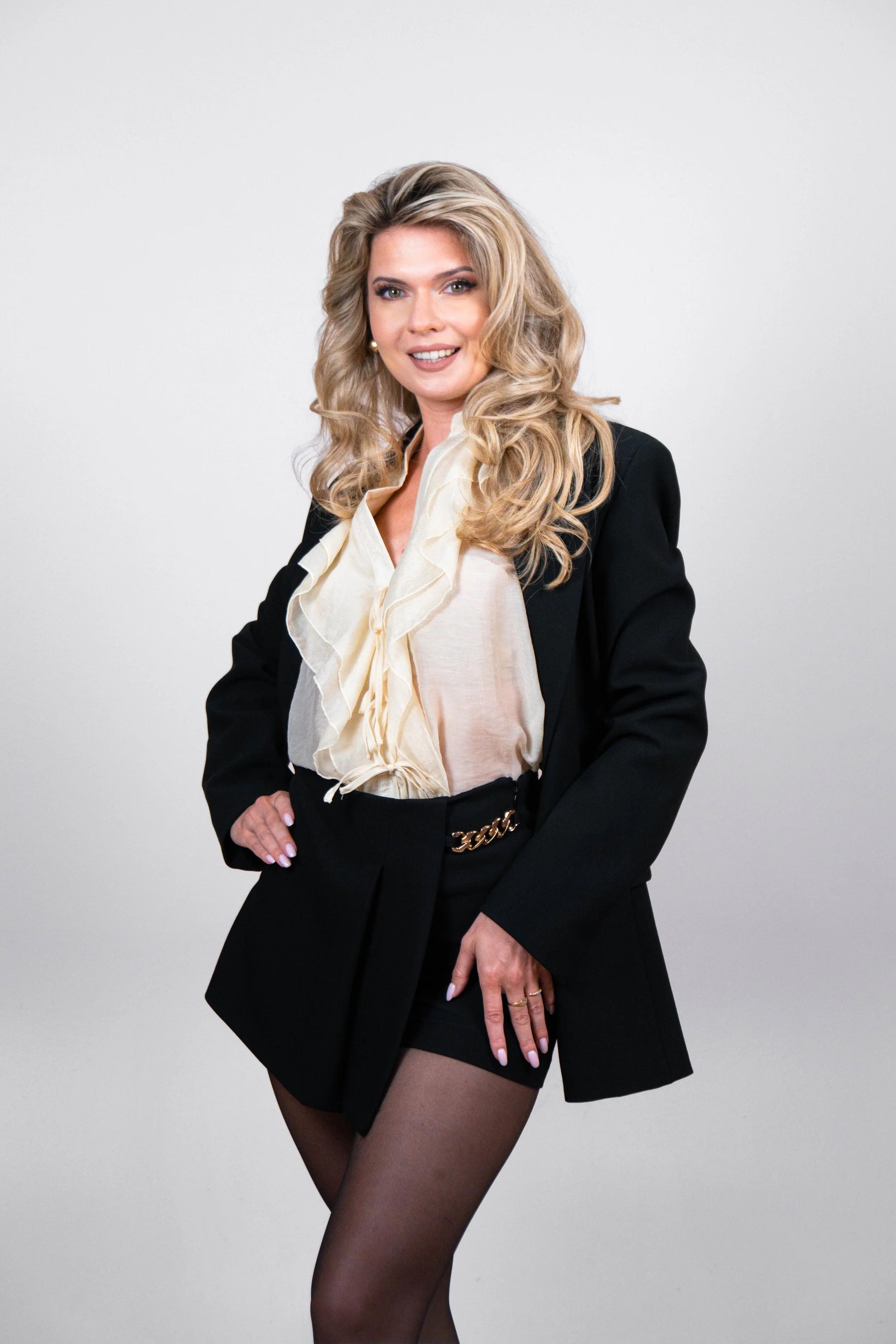
Ready to Close the Gap?
If you have a speaking engagement, networking event, podcast appearance, or high-stakes presentation coming up — and you want to make sure you're not accidentally undermining yourself — let's talk.
I work with women executives, founders, and speakers on the specific, repeatable mechanics of presence: how to stand, how to move, how to use your voice, how to own a room before you've said a word.
Whether you need a single session before a big moment or a deeper intensive, I'll help you walk in prepared — and walk out remembered.
Kate Ziuz is a self-presentation and executive presence coach based in Los Angeles. She works with women leaders, speakers, and founders to close the gap between their expertise and how they're perceived. Follow her on Instagram for monthly field notes, presence breakdowns, and behind-the-scenes from her coaching work.
