The Most Popular Questions About Presence — Answered
By Kate Ziuz | Presence Coach for Founders & Entrepreneurs
Presence is one of those words everyone uses and almost nobody defines well. These are the questions I get asked most — in strategy calls, in DMs, at events — answered directly, without the fluff.
What is presence?
Presence is the gap between your actual expertise and how much of it people can perceive. It's not a feeling, a personality trait, or something you're born with. It's what other people experience when they're in the room with you — or watching you on screen.
Most people think presence is about being loud, commanding, or naturally magnetic. It isn't. Presence is physical and perceivable — it lives in your posture, your eye contact, the pace of your speech, the stillness of your hands. When those things are aligned with your expertise, people believe you before you've said a word. When they're not, even the most brilliant person in the room gets overlooked. That gap is fixable. That's exactly what presence coaching is.
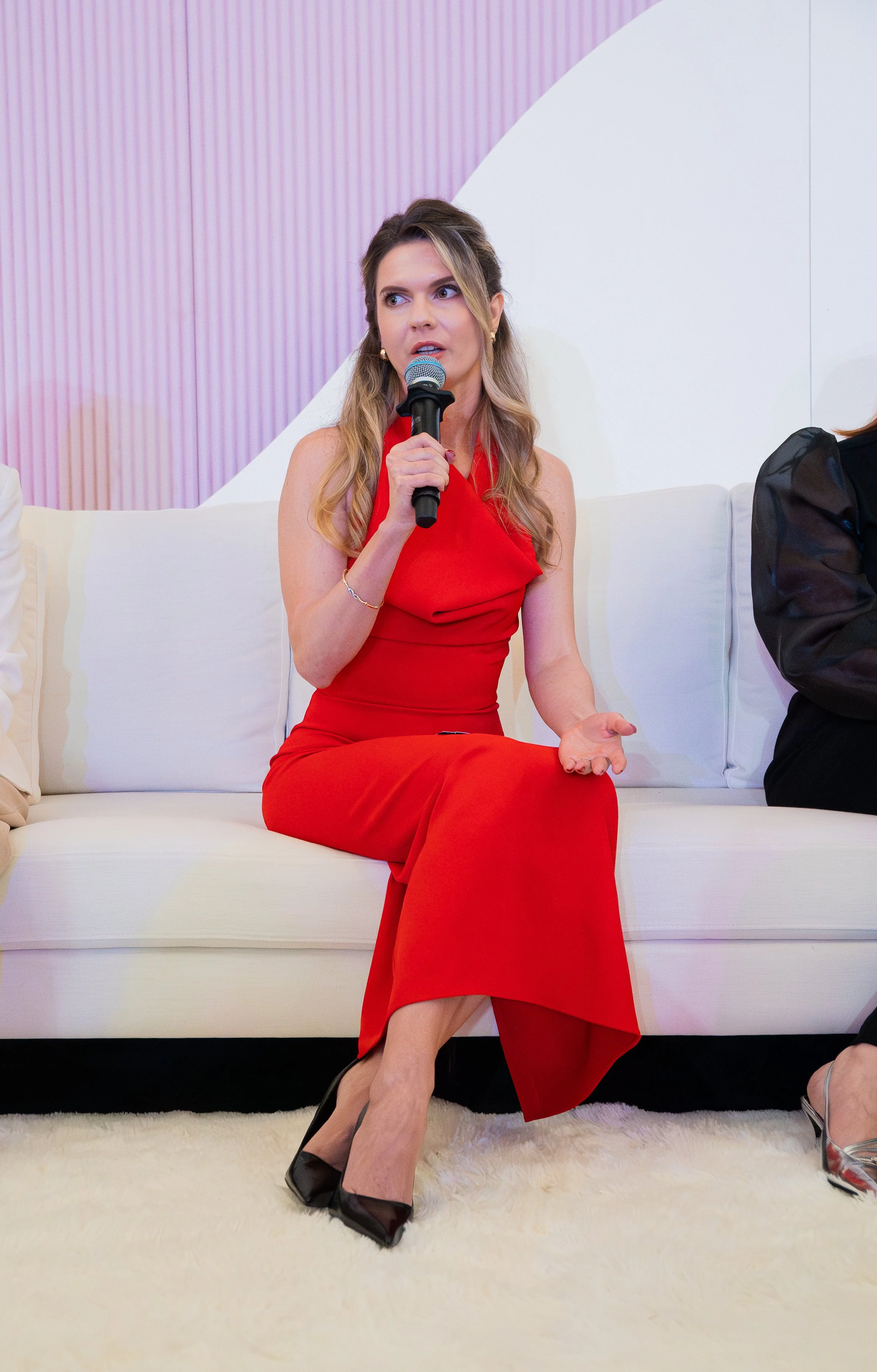
Presence coach Kate Ziuz demonstrating commanding stage presence at a speaking event in Los Angeles
How do I master my presence?
You master your presence the same way you master any physical skill — through awareness, repetition, and feedback. Not through motivation. Not through mindset work. Through mechanics.
The starting point is always an audit: what is your body actually doing in high-stakes moments? Most people have no idea. They feel composed on the inside while their shoulders are rounding forward, their eyes are scanning instead of landing, and their speech is speeding up under pressure. Once you can see the specific patterns that are undermining you, you can interrupt them and replace them with new ones. That's the work. Identify the pattern, break the pattern, rewrite the pattern — until the new version becomes your automatic default across every visible moment.
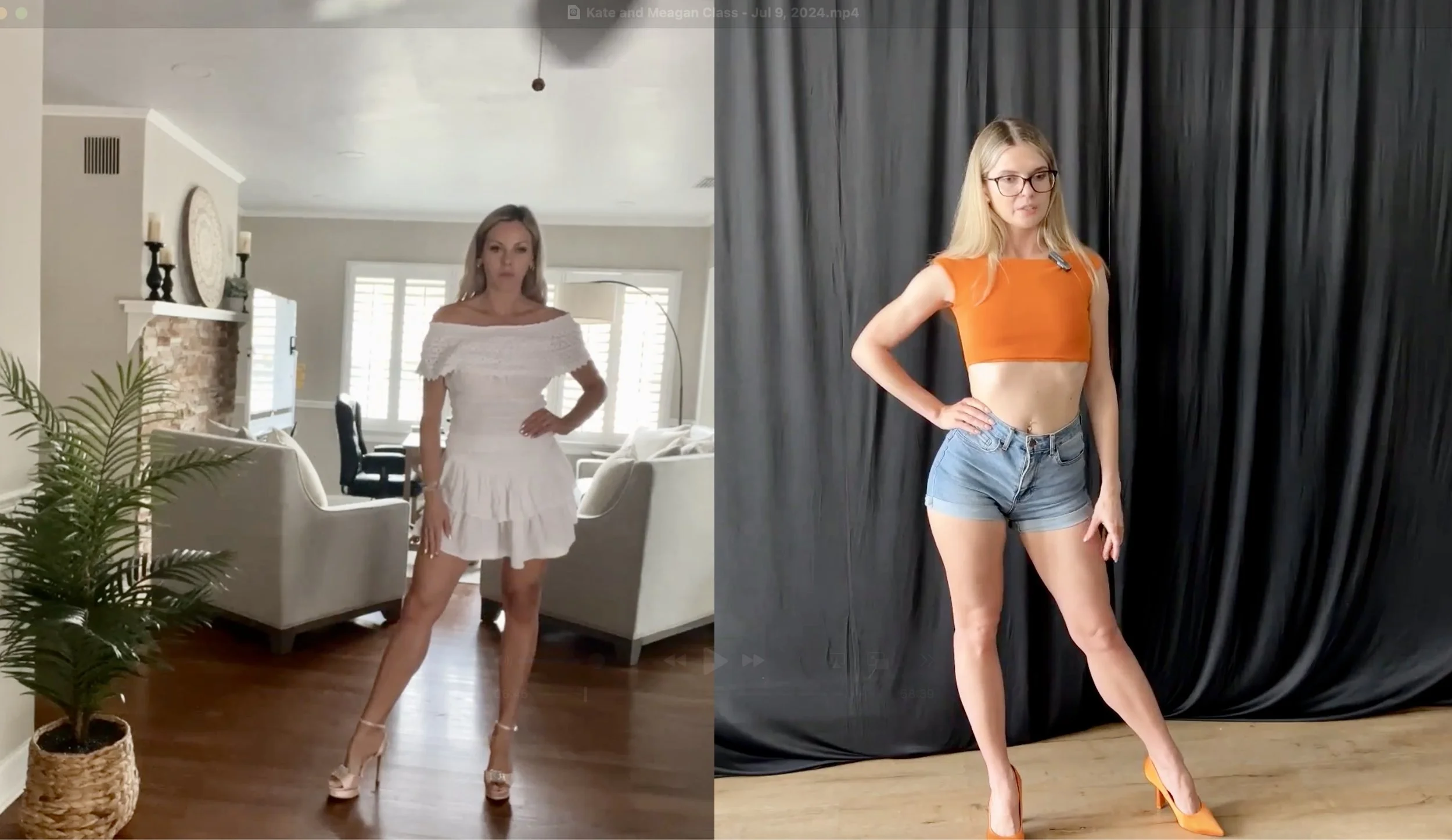
Presence coach Kate Ziuz working with a client during a one-on-one coaching session, reviewing body language patterns to build consistent, commanding presence
What makes a powerful presence?
Not volume. Not dominance. Not the loudest voice in the room.
Powerful presence is grounded certainty — the physical signals that tell everyone around you that you know exactly where you are and why you're there. It shows up in specific, trainable ways: shoulders back and down, not hunched or held up with tension. Eyes that land and hold, not scan or dart. A pace of speech that has space in it — pauses that signal you're not in a hurry to get your words out before someone stops you. Hands that are still or purposeful, not fidgeting. None of these are personality traits. They are physical choices, and every single one of them is learnable. The women who seem to naturally command a room aren't luckier than you. They're trained — consciously or not.
Can introverts have strong presence?
Not only can they — introverts are often better at it than extroverts once they learn the mechanics.
Here's why: powerful presence isn't volume, it's stillness. It's not filling every silence, it's being comfortable enough in your own authority that you don't need to. Introverts who aren't trying to perform extroversion often have a natural groundedness that reads as gravitas once the physical mechanics are in place. The problem isn't that introverts lack presence — it's that they've been told presence looks like something it doesn't. It doesn't look like being the loudest or the most energetic person in the room. It looks like being the most intentional. And intentional is something every introvert I've ever coached can do.
Is presence coaching only for executives and C-suite leaders?
No — and this is the most common misconception I run into.
Most presence coaching is built for the corporate world: boardrooms, investor pitches, managing up. If that's your context, that work is valuable. But my clients are founders, entrepreneurs, coaches, and consultants who are building visible brands through podcasts, speaking engagements, video content, and media appearances. Every podcast recording is a speaking engagement. Every piece of video content is a media appearance. Every time you walk into a room full of potential clients, your presence is working for or against you before you open your mouth. If your visibility is tied to your revenue — and for most founders it is — then your presence has stakes just as high as any boardroom. They're just different stakes.
Read more about Executive Presence in my blog post: What Is Executive Presence and How Do You Build It?
How do you command the room as a woman?
You stop trying to take up less of it.
The single most consistent pattern I see in women who are being overlooked despite being the most qualified person in the room: they compress. Shoulders forward, chin slightly down, voice that trails at the end of sentences, body angled slightly away. All of it communicates "I'm not sure I should be here" — even when every credential says otherwise. Commanding a room as a woman doesn't mean performing masculinity or being louder than everyone else. It means being physically grounded in your own authority. Shoulders back and down. Chin at neutral. Eye contact that lands and holds. A voice that ends statements as statements, not questions. These are mechanics, not personality traits — and they work every single time, without making you someone you're not.
Kate Ziuz's Favorite Quotes on Presence
"Predictable is forgettable. Be the one they remember."
This is why consistency across multiple visible moments matters more than one perfect performance. Your audience — podcast listeners, event attendees, content followers — builds their impression of you across every time they encounter you. One great moment is a moment. Five consistent moments is a reputation.
"When you move with intention, the world pays attention."
Intentional movement is one of the fastest presence fixes I teach. When you walk into a room with purpose — a clear pace, a direction, a physical destination — people track you. When you drift in looking for where to stand, people look away. The body leads the perception. Always.
"Stand tall even when the world tries to make you small."
The compression pattern I see in high-achieving women isn't accidental. It's a learned response to environments that have, at some point, signaled that taking up space isn't welcome. Standing tall — literally, physically — is both a presence mechanic and a reclamation. Your posture is not just about how others see you. It's about how you enter every room you've earned the right to be in.
"Presence isn't magic. It's mechanics." — Kate Ziuz
Every woman who seems to effortlessly command attention has a set of physical habits working in her favor. Named or not, conscious or not — they're mechanics. Which means they're learnable. Which means they're yours.
"One great podcast is a moment. Five consistent recordings is authority." — Kate Ziuz
Presence compounds. Every visible moment you show up well builds on the last one. That's not inspiration — that's how credibility actually works.
Ready to Close the Gap?
If any of these questions landed — if you recognized yourself in the compression pattern, in the camera awkwardness, in the feeling of being overlooked despite being qualified — the next step is a conversation.
Book a free 30-minute strategy call and we'll talk about what you're building, what's coming up, and whether the work makes sense right now.
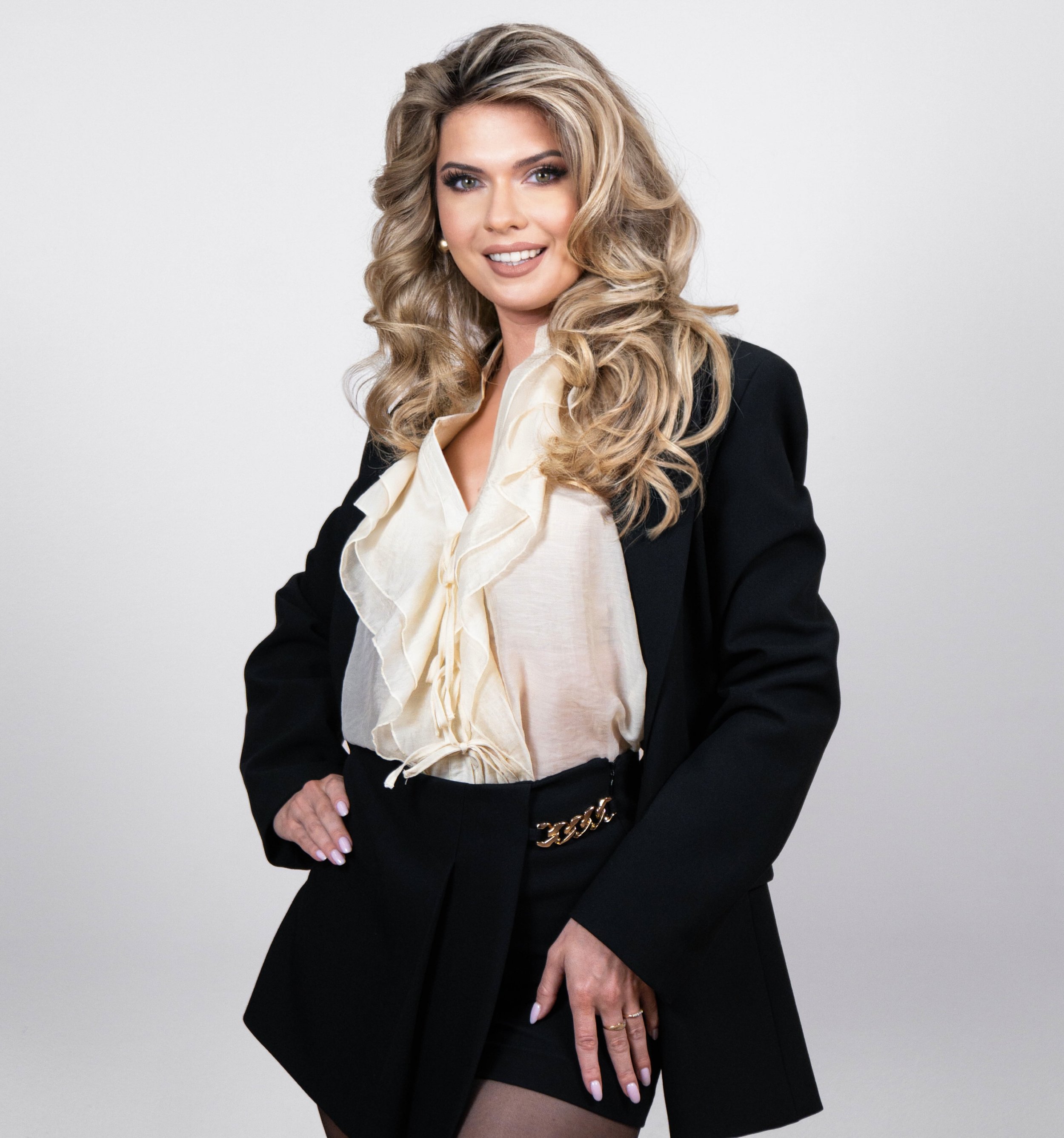
Kate Ziuz is a presence coach for founders and entrepreneurs building visible brands. She specializes in the mechanics of on-camera presence, stage presence, and high-stakes preparation — helping clients close the gap between their actual expertise and how credible they appear. Based in Los Angeles. Featured in Best Holistic Life Magazine, Femforce Podcast, Authority Magazine, and more.
