Everyone's Calling Create & Cultivate 2026 a Disaster. Here's What I Actually Saw.
By Kate Ziuz | Presence & Body Language Coach in LA
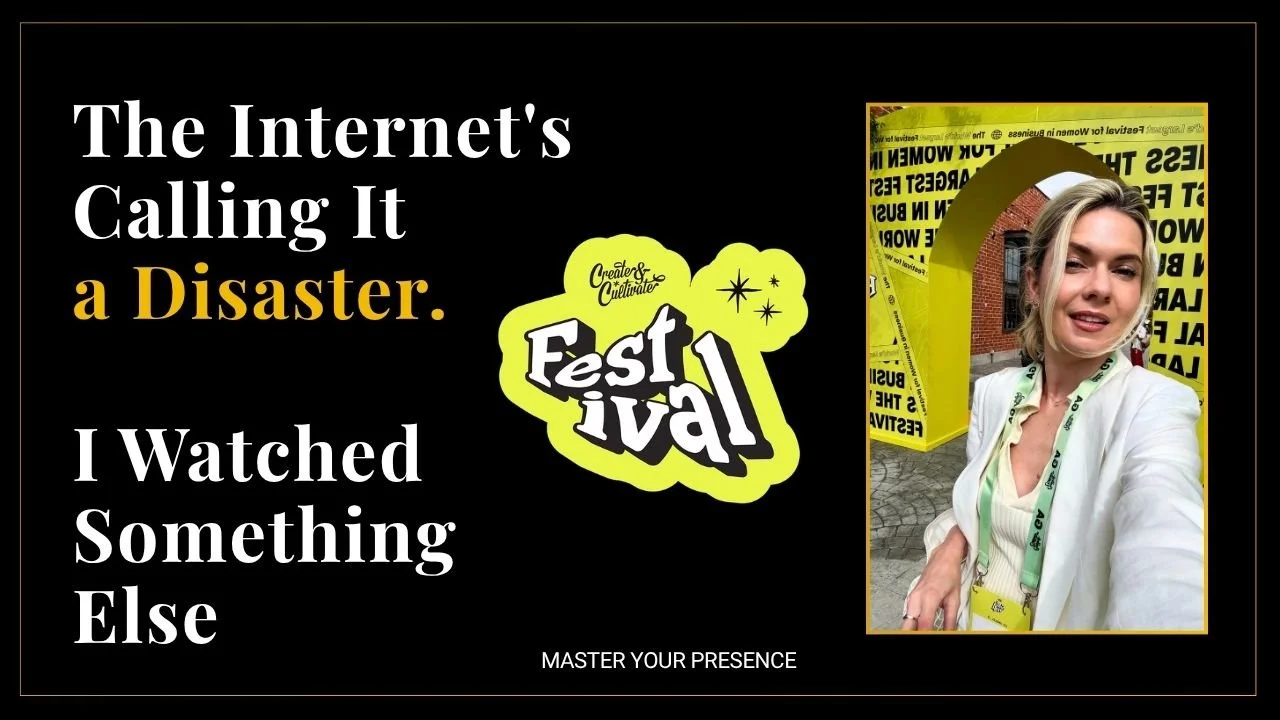
If you've been on Threads this week, you already know Create & Cultivate is getting dragged. The food ran out. The lines were long. Someone called it "the Fyre Festival of business."
Let's kill that comparison first, because it's lazy. Fyre was a scam — it never happened. Create & Cultivate is a real, growing festival that pulled 4,600+ people and a speaker list most events would kill for: Alix Earle, Whitney Wolfe Herd, Emma Grede, Halle Berry. Comparing the two isn't criticism. It's a good line for engagement.
So here's the honest version. What was actually rough, what was overblown, and then — because this is what I do — what I watched happen on those stages that nobody's talking about.
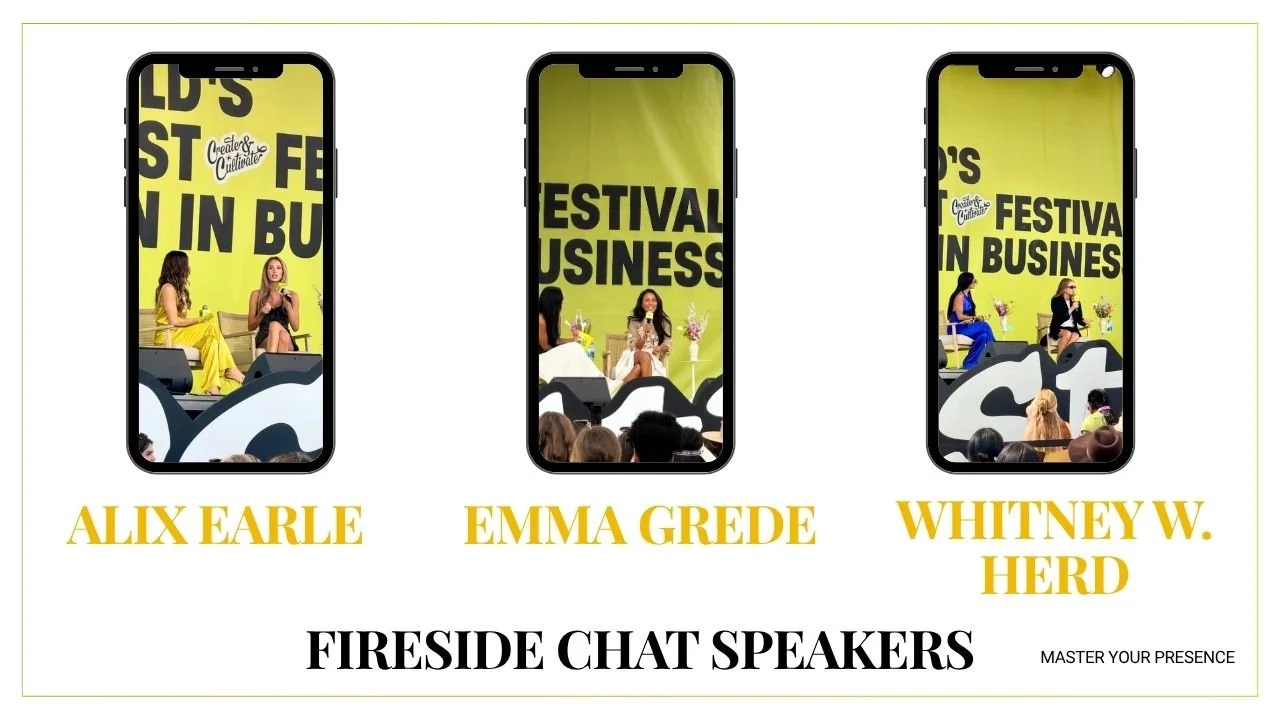
Fireside chat speakers
What Was Actually Worth Complaining About
I'll name the real ones, because pretending everything was perfect is its own kind of dishonest.
The location and parking. South Central LA, no provided parking, in a car city. They suggested rideshare, which works if you flew in and you're staying in DTLA — like a lot of the out-of-town guests were. But plenty of locals live well beyond a comfortable Uber, and in LA, parking isn't a luxury. It's the baseline. This one's fair.
The heat and the wait. Day one opened with a broken registration system and 40–90 minute lines. Outdoors. In the sun. They handed out cold water, which I genuinely credit, but shade was scarce across the venue and I'd have wanted far more seating and A/C areas. Also fair.
The sound. This is the one I'd push hardest on. A mic cutting out once is nothing. A mic failing repeatedly on the main stage is a production problem, and audio quality was inconsistent across the Creators Compound and Core Campus too. That's on the producers and the sound engineers, and it's worth fixing because it affects everyone — guests and speakers both.
Here's the part worth knowing: the organizers have already addressed the logistics publicly and are moving to early registration pickup a few days before the event, which is exactly how the big events run it. Web Summit in Lisbon does it. Amsterdam Dance Event does it. Growing pains at a scaling event are normal, and they're responding like professionals.
What I Watched on Those Stages
I'm a presence coach. I don't watch events the way most people do. While everyone else was in line for the salad, I was watching how women showed up when they got the mic — and the difference between the memorable ones and the forgettable ones had almost nothing to do with their expertise.
Every speaker there was accomplished. That was the baseline, not the differentiator.
The panel problem nobody prepares for
Create & Cultivate ran a few formats. Fireside chats with a single guest — Alix Earle, Emma Grede, Whitney Wolfe Herd, Halle Berry — where one person has the stage and a host draws them out. And multi-person panels like "F*ck You Money: How to Grow Your Personal Wealth While Building Your Business" (Mary Holland Nader, Natalie Ellis, Tiffany "The Budgetnista" Aliche, Nicole Lapin) and "The New Authority: Building a Brand on Insight, Not Just Aesthetics" (Alexis Barber, Chloe Shih, Julia Broome, Sammi Tannor Cohen, Jenny Park).
A fireside is easy mode for presence — the spotlight is yours. A panel is hard mode. You're one of three to five people competing for the same attention, and most speakers don't adjust for that. They show up with the same energy they'd bring to a solo talk and wonder why they blended in.
Here's what separated the memorable from the forgettable:
Specifics over generalities. This was the single biggest one. When you answer a money question with "invest in yourself and stay consistent," you're forgettable — it's true and it's air. When you say "I did two million last year and here's the one decision that moved it," people pick up their phones. When someone said "I use different prompts for my AI," nothing. When someone named the actual prompt and the exact use case, that's the clip that ends up on someone's Story. Concrete numbers, real cases, named examples — that's what makes you memorable and shareable. General wording makes you wallpaper.
They used the room. With the sound as shaky as it was, the speakers who projected — who were physically willing to be louder than felt comfortable — simply landed. The soft-spoken ones lost the back half of the audience whether their content was good or not.
They looked different. On a five-person panel, brighter or bolder clothing, an interesting accessory, a distinctive hairstyle — these aren't vanity. They're visual anchors that make you the one people remember and point to. When four people are in neutral tones, the person in color owns the eye.
They used humor. A well-placed joke breaks the panel monotony and makes you the human people connect to.
None of that is about being the smartest person on the panel. It's about being the most perceivable one. That's the whole game, and most experts never train for it because they assume expertise speaks for itself. On a panel, it doesn't. Presence does.
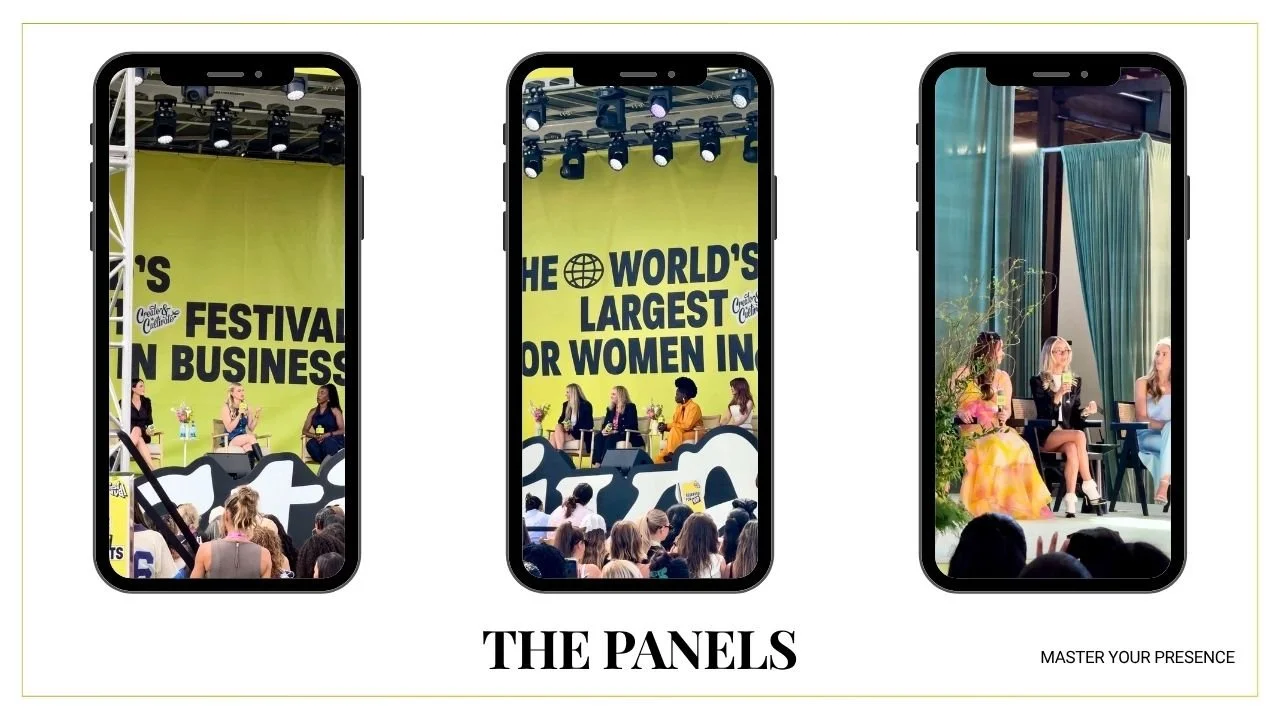
Multi-person panel at Create & Cultivate 2026
The mic-failure masterclass
Here's where a real problem became a real opportunity, and one person showed exactly how it's done.
When the audio cut out, Emma Grede handled it like a masterclass. She stayed calm. She stayed composed. She didn't over-apologize or make it awkward — she waited it out, and when it resolved, she played it off with a light joke that put the whole room at ease.
That's the lesson I teach my clients: a technical failure is not your emergency to fix, and it's not a reason to panic. As a guest, you're not obligated to leap into problem-solving or overreact. You acknowledge it without feeding it more attention, you stay grounded, and you keep going.
The audience doesn't remember that the mic broke. They remember whether you fell apart or held the room.
(If you're the organizer or host, sure — get up and go handle it backstage, that's your job. As a guest, composure is the whole assignment.)
Across the board, most hosts and speakers handled the hiccups with grace. Acknowledged, unbothered, moving on. That's presence under pressure, and it's trainable.
A Note to the Audience (Yes, You)
One format I loved was the Hot Seat — a 20-minute open Q&A, no moderator, no prepared remarks, just you and an expert like brand photographer Brit Perkins or negotiation expert Mori Taheripour. The description literally said come ready.
So here's my direct, loving feedback to fellow attendees: come ready.
Presence isn't only the speaker's job. The moment you pick up that mic to ask a question, the whole room is reading you too.
The experts can answer almost anything concisely — that's why they're up there. The bottleneck was us. Too many questions started with a minute of self-introduction, a soft-pitch of the person's own business, three filler words, and then a generic question that could've been asked in eight seconds. "Hi, yes… one sec, sorry… um, hm, I'm nervous, let me find it, so…" — while you were saying all that, you could have already asked the question.
And a presence note, because I can't help myself: stand up and raise your voice. It's an outdoor venue, hundreds of people, sun in everyone's eyes, and the sound wasn't helping. If you mumble from your seat, the speaker can't find you or hear you, and you've burned everyone's time. Stand. Be clear. Get to the point.
To be clear — you should introduce yourself. Briefly. A line of context about what you do and your area of expertise actually helps the expert give you a sharper answer. There's a difference between useful context and a monologue. One sentence of who you are, then the question. That's it.
One More Thing the Reviews Are Missing
For all the logistics talk, here's what actually made the two days worth it: the room.
As I saw it, and as everyone I talked to agreed, Create & Cultivate is a genuinely great place to network. Whether you're meeting people for the first time or — even better — finally hugging the online friends you've been in each other's comments with for a year, this is the kind of event where those relationships move offline. And that's the thing you can't get from a livestream.
Thank you Galit Fuller, Porsché Mysticque Steele, Lucy Bedewi, Natalie Bernacchi, and Nicole Santos for the company. Always a good time with women making real impact in their niches.
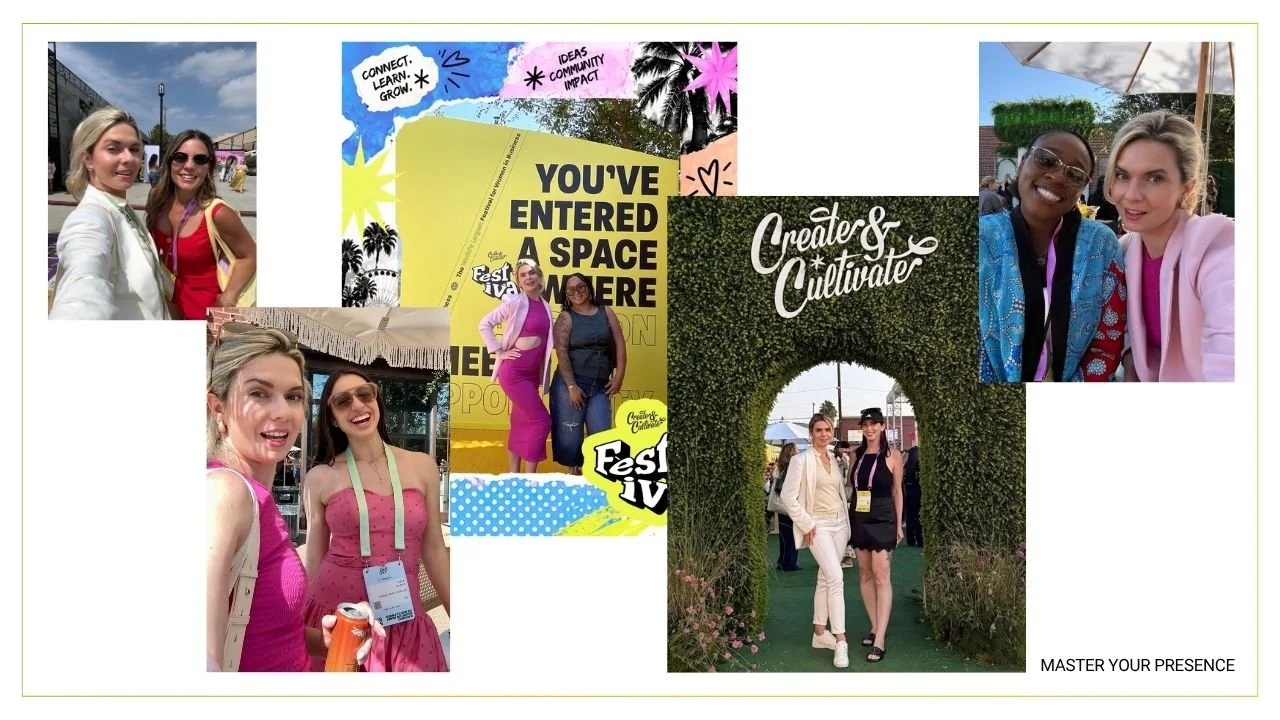
Kate Ziuz with fellow founders and entrepreneurs at the Create & Cultivate 2026 festival in Los Angeles
The Real Takeaway
You can't control whether an event runs perfectly. The food, the parking, the sound — none of that is yours to manage.
What you can control is whether you're the person who stood out in that room. Whether your answer was the one people clipped. Whether you held the stage when the mic died. Whether you asked the question everyone remembered, or the one everyone waited through.
That's presence. And unlike the parking situation, it's entirely learnable.
Create & Cultivate will fix its logistics — they're already on it. The question worth asking isn't whether the next event will be perfect. It's whether you'll be ready to be unforgettable in it.
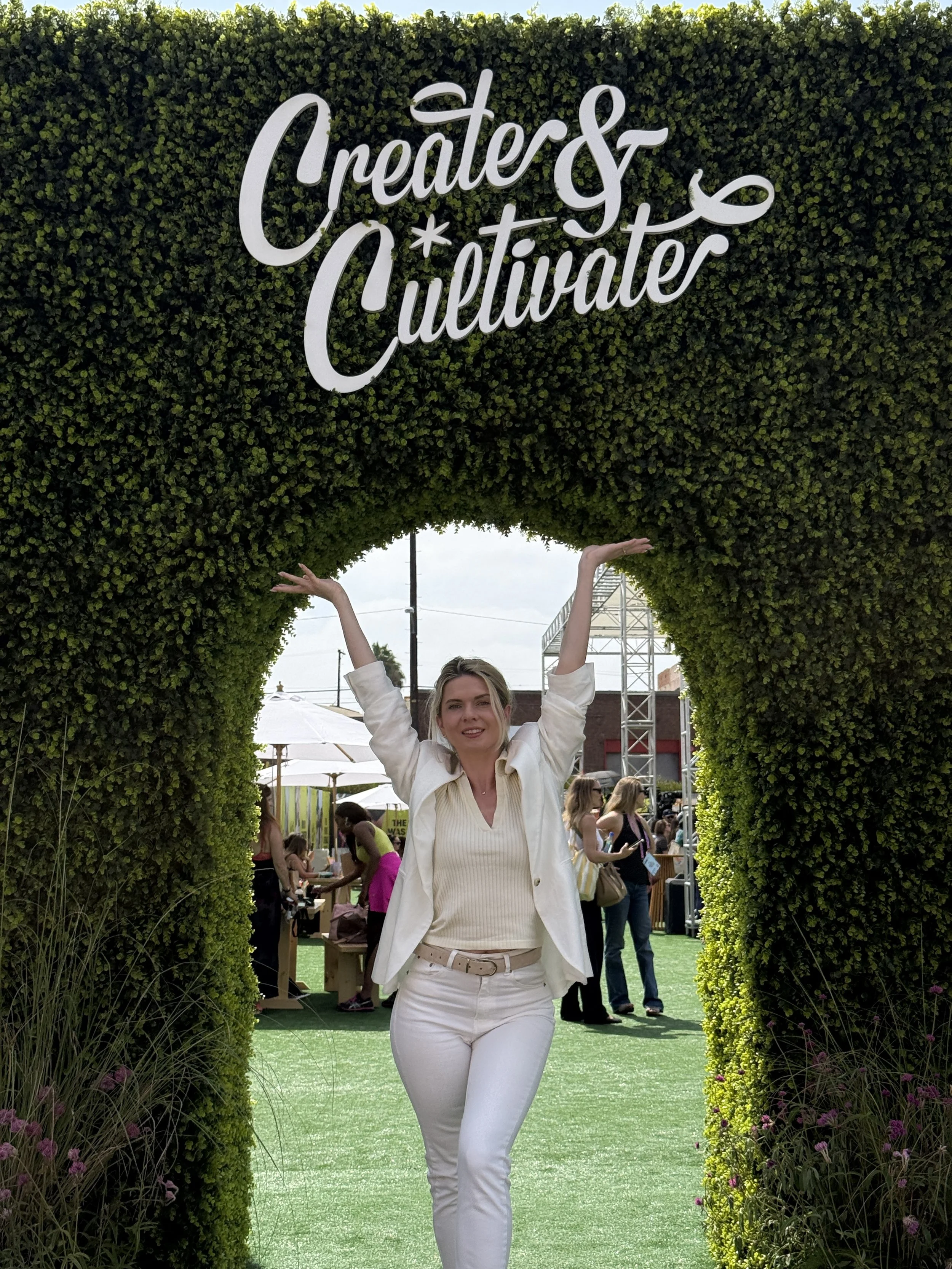
Presence coach Kate Ziuz at Create & Cultivate 2026 in Los Angeles, where she observed stage presence and panel dynamics across two days of programming.
If You Have a Panel or Stage Coming Up
If you're speaking at an event in the next few weeks — a panel, a fireside, a conference stage — the difference between blending in and being the one people remember is mechanics, not expertise. That's what I do.
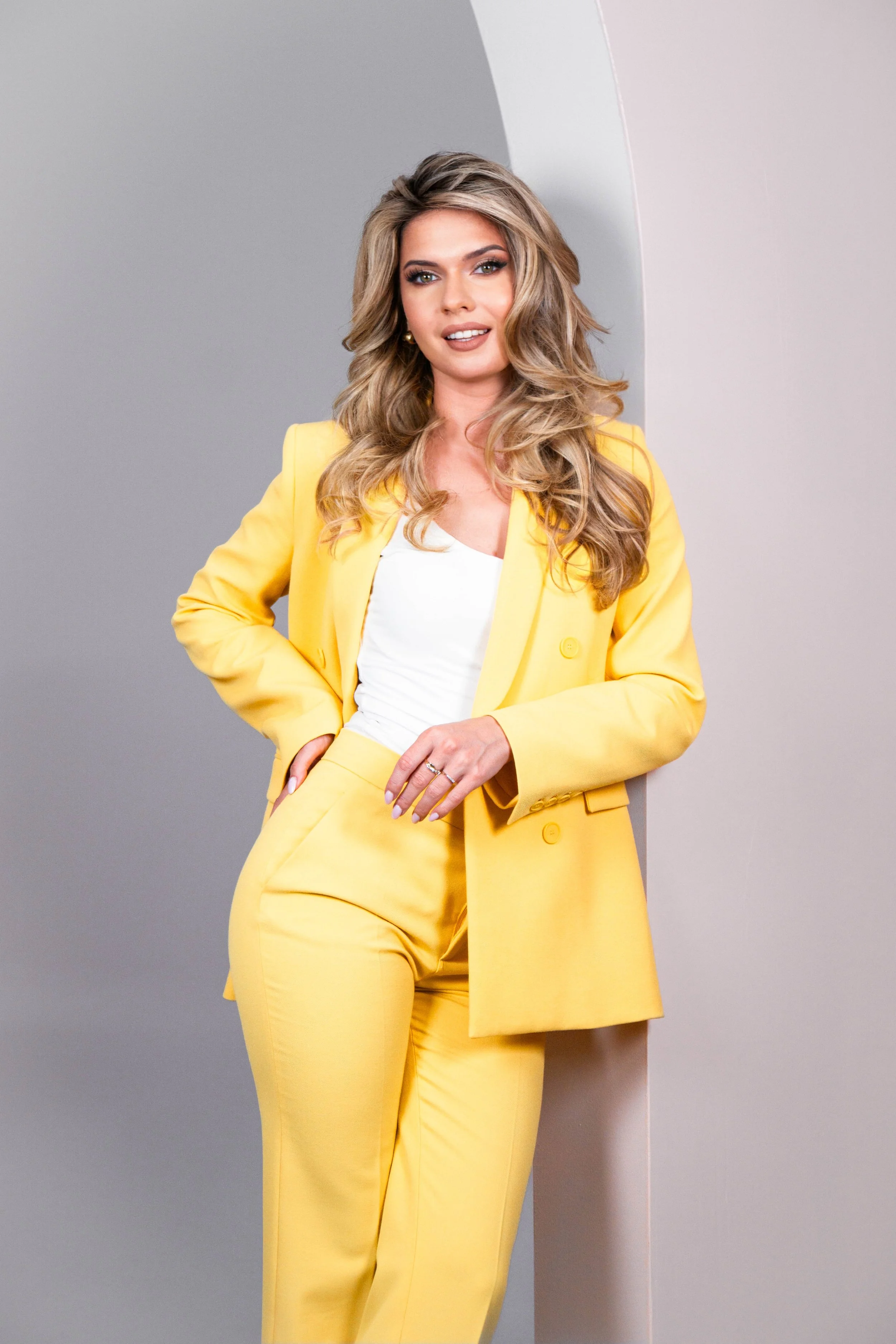
Kate Ziuz is a presence and body language coach in Los Angeles, working with women leaders, founders, and entrepreneurs building visible brands. She teaches the mechanics of presence — posture, eye contact, pace, gesture, and stillness — for speaking engagements, podcast interviews, on-camera content, and media appearances. Featured in Best Holistic Life Magazine, Authority Magazine, VoyageLA, and more.
